2012 philadelphia flower show inspirado!

floral wave

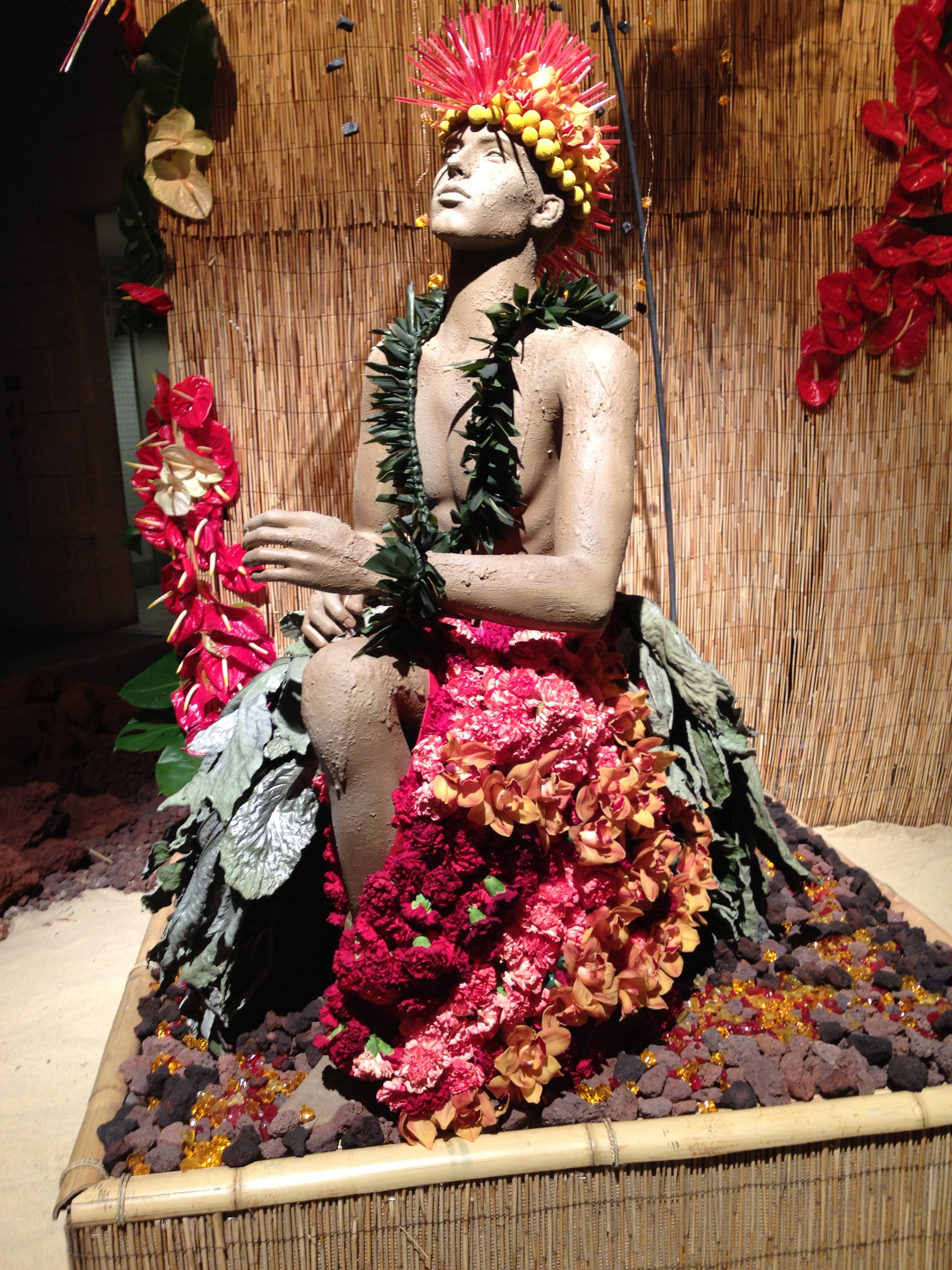
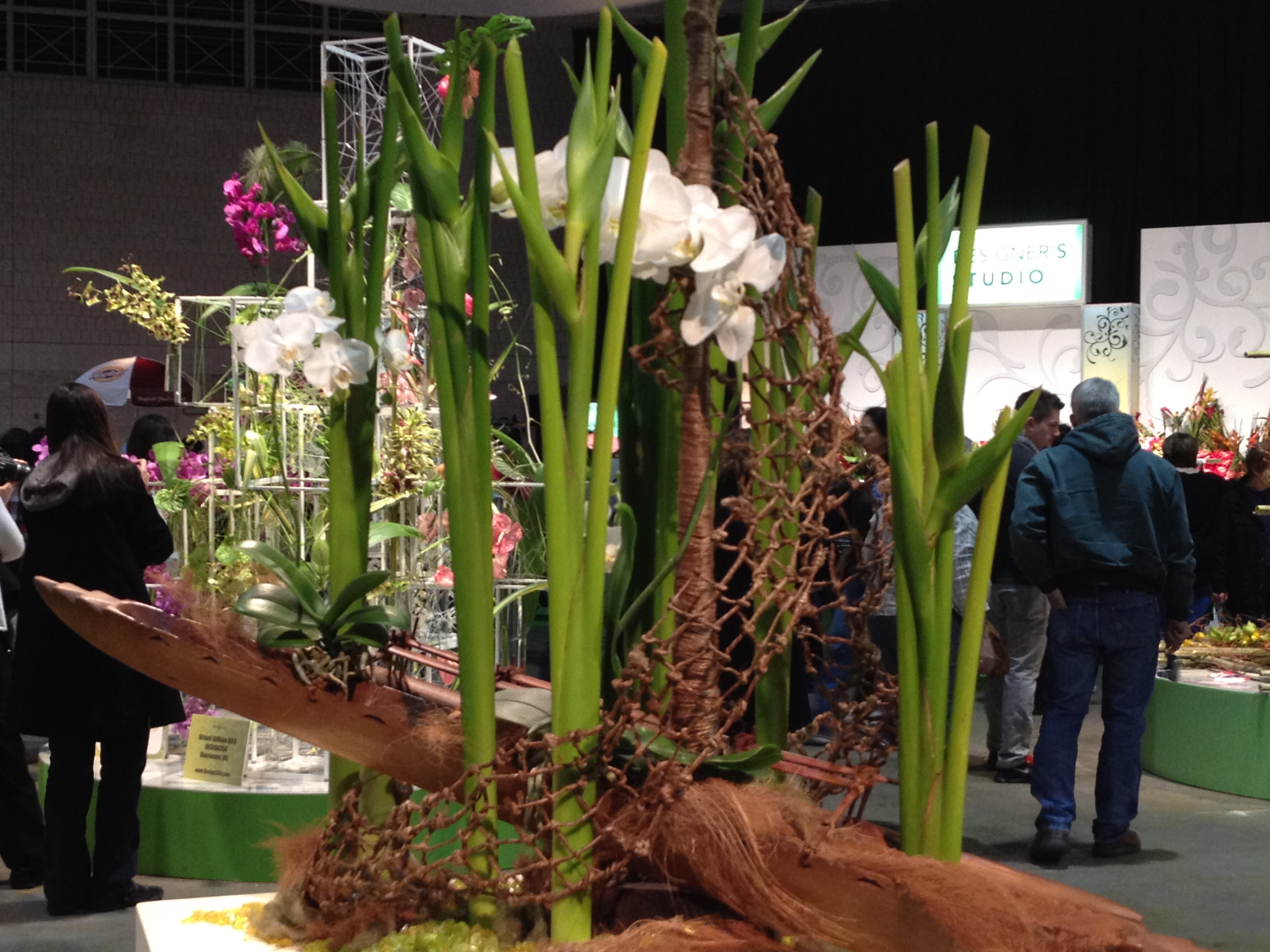
“We’re going to Hawaii!” my peeps and I kept shouting on the way there.  And it was just what the doctor ordered for our sunlight-starved, oxygen-deprived, pale winter bodies.   And I’m glad there were so many plants to compensate for all the oxygen-breathing crowds – I mean, it was SO crazy packed I could barely get over to see Longwood Instructor Jane Godshalk’s amazing Hula Man.

Hula man in AIFD's installation by Jane G. - WOW.

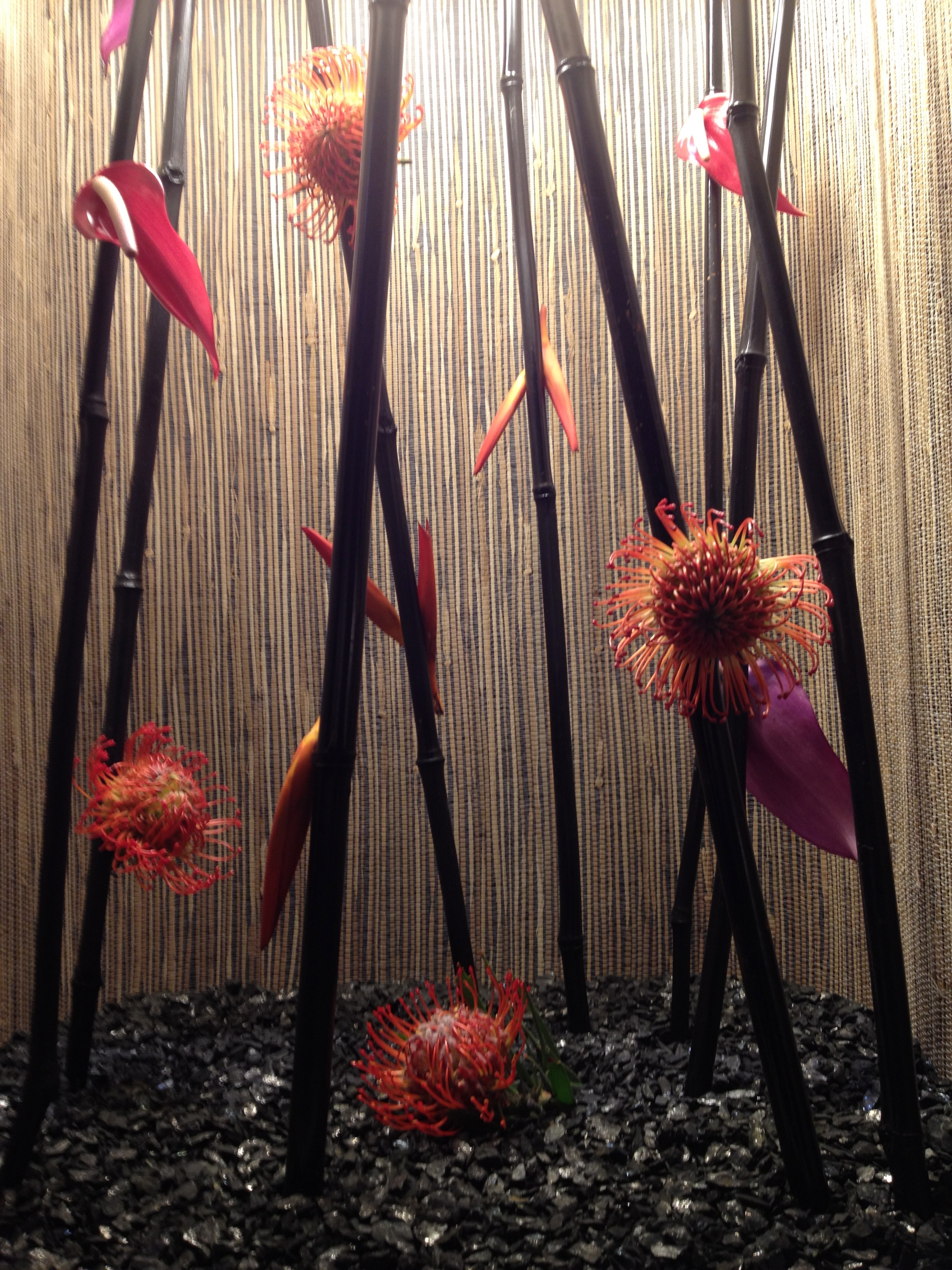
I liked how there were rows of arrangements displayed in their own little specially-lit boxes

This design evokes 'Tiki' the best according to judges - Pincushion Protea

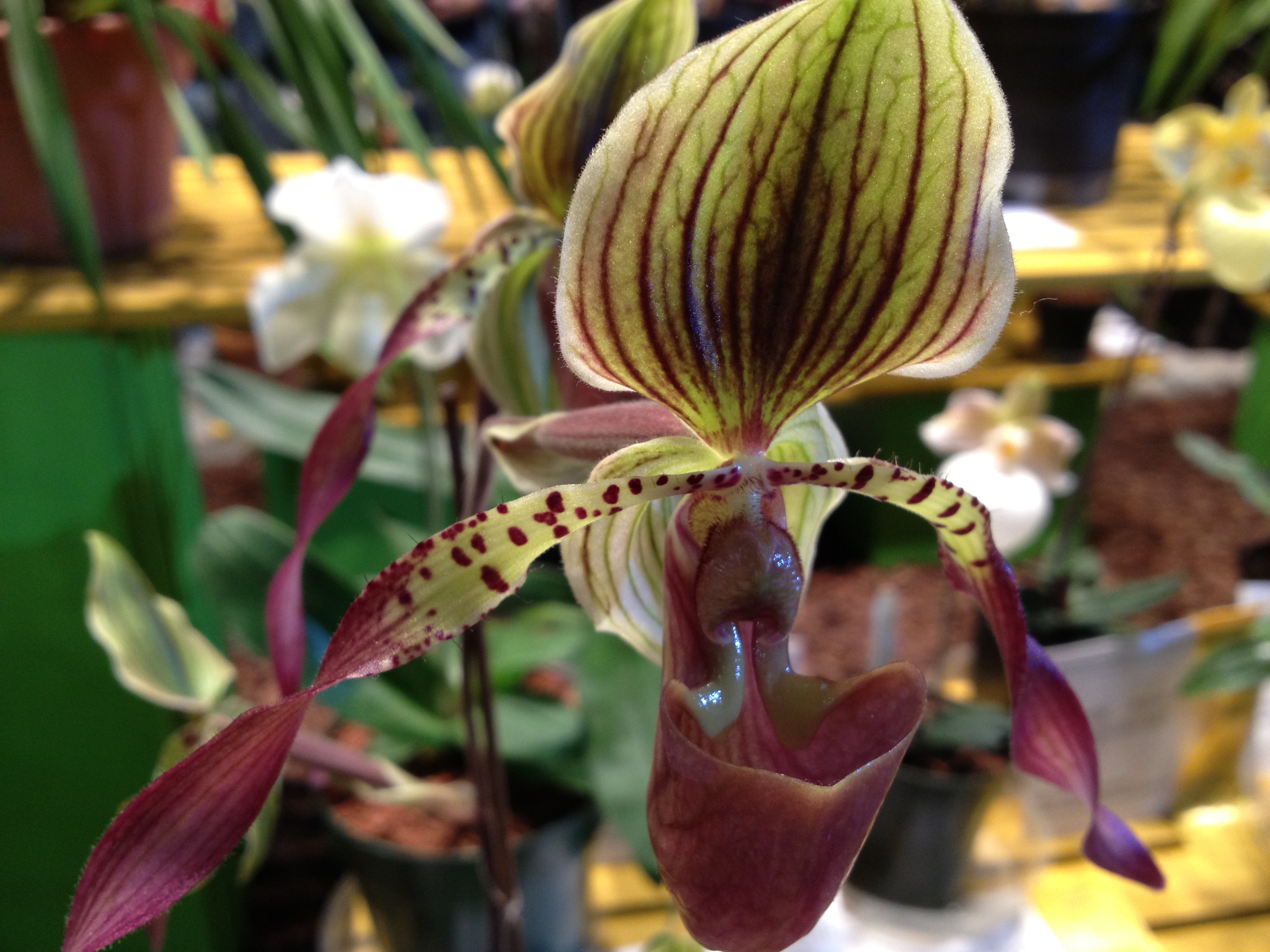
Paphiopedilum Orchid

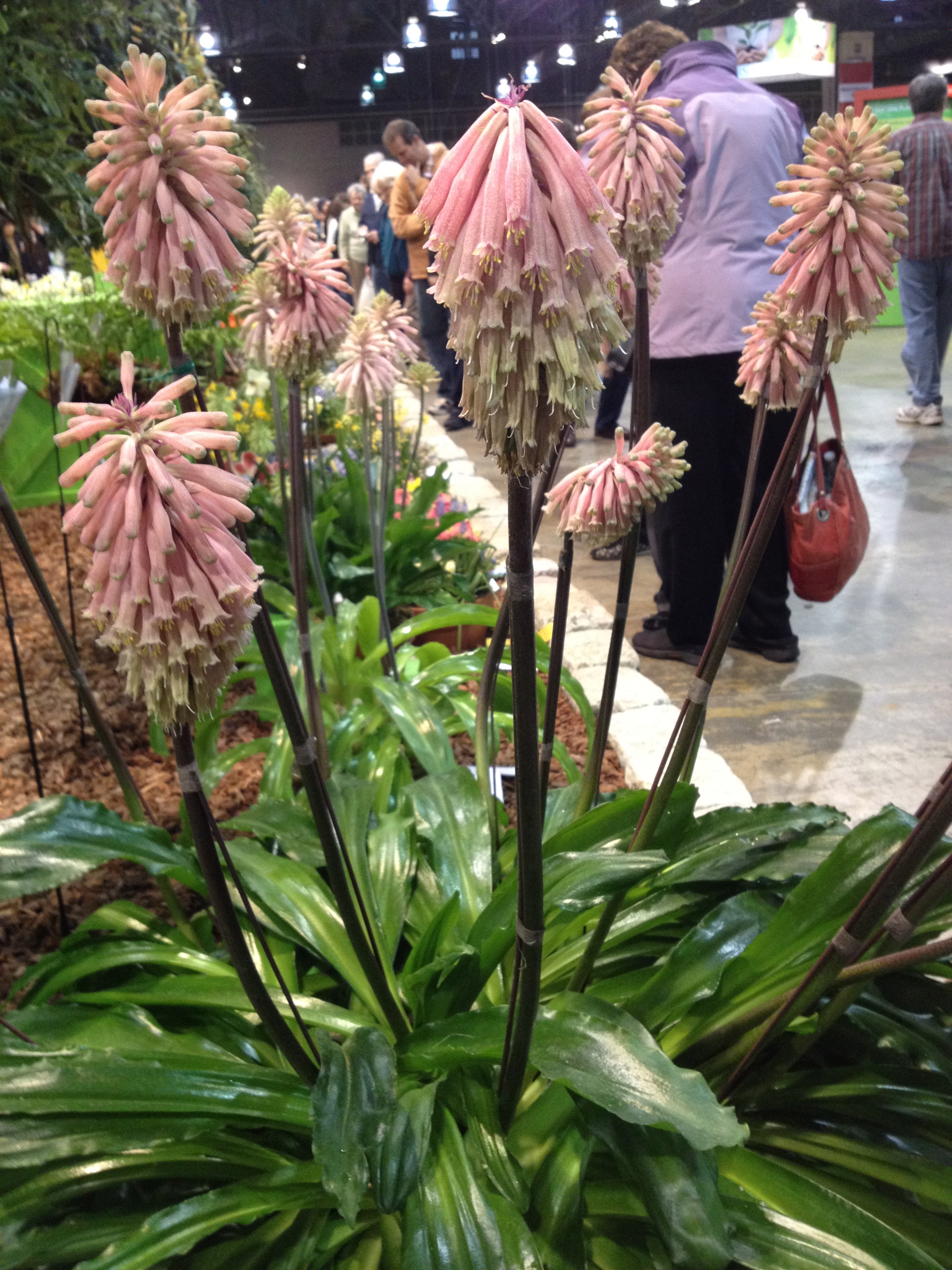
someone please tell me what this is

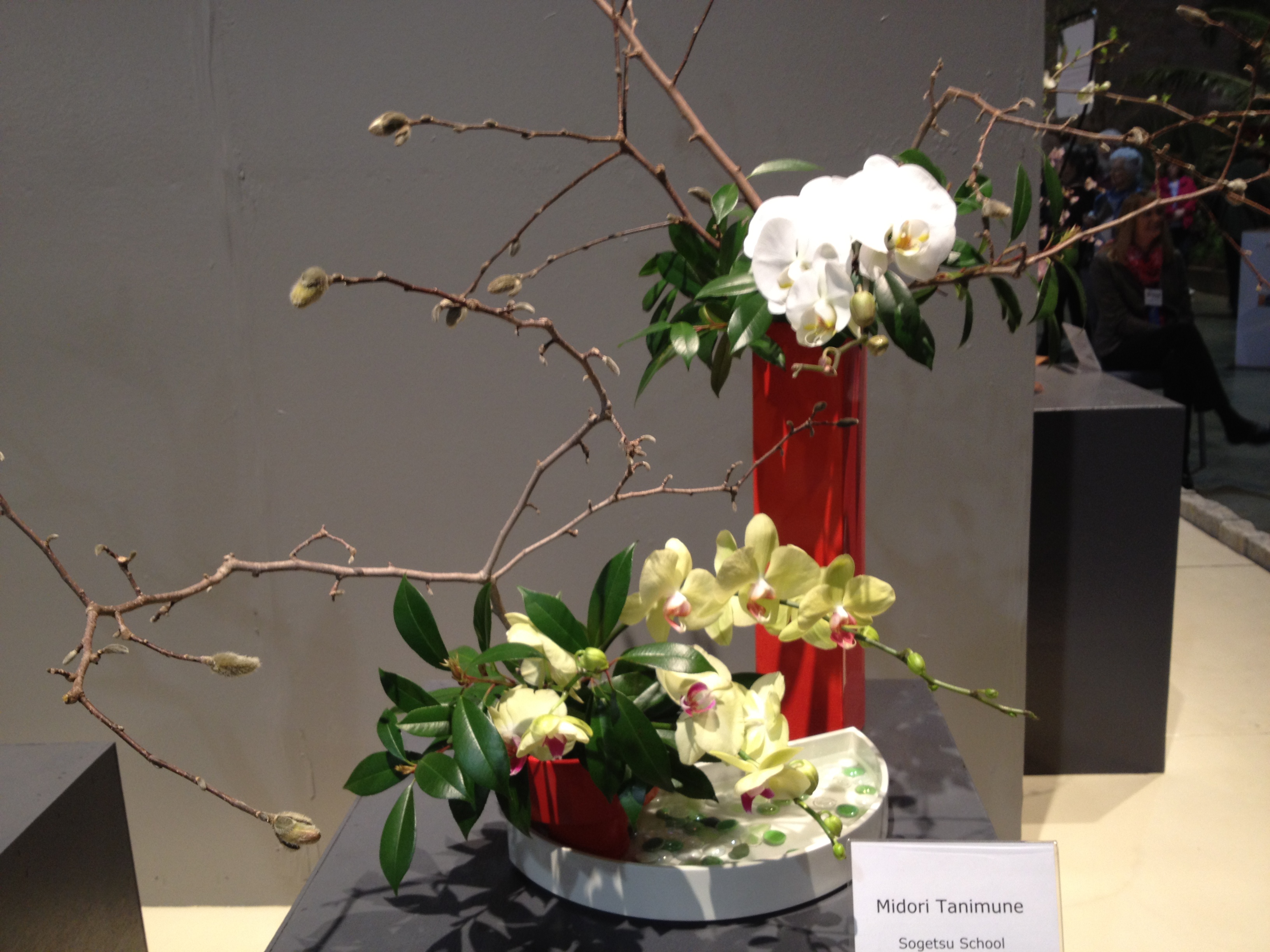
Ikebana by Midori Tanimune, one of my Ikebana Longwood Instructors

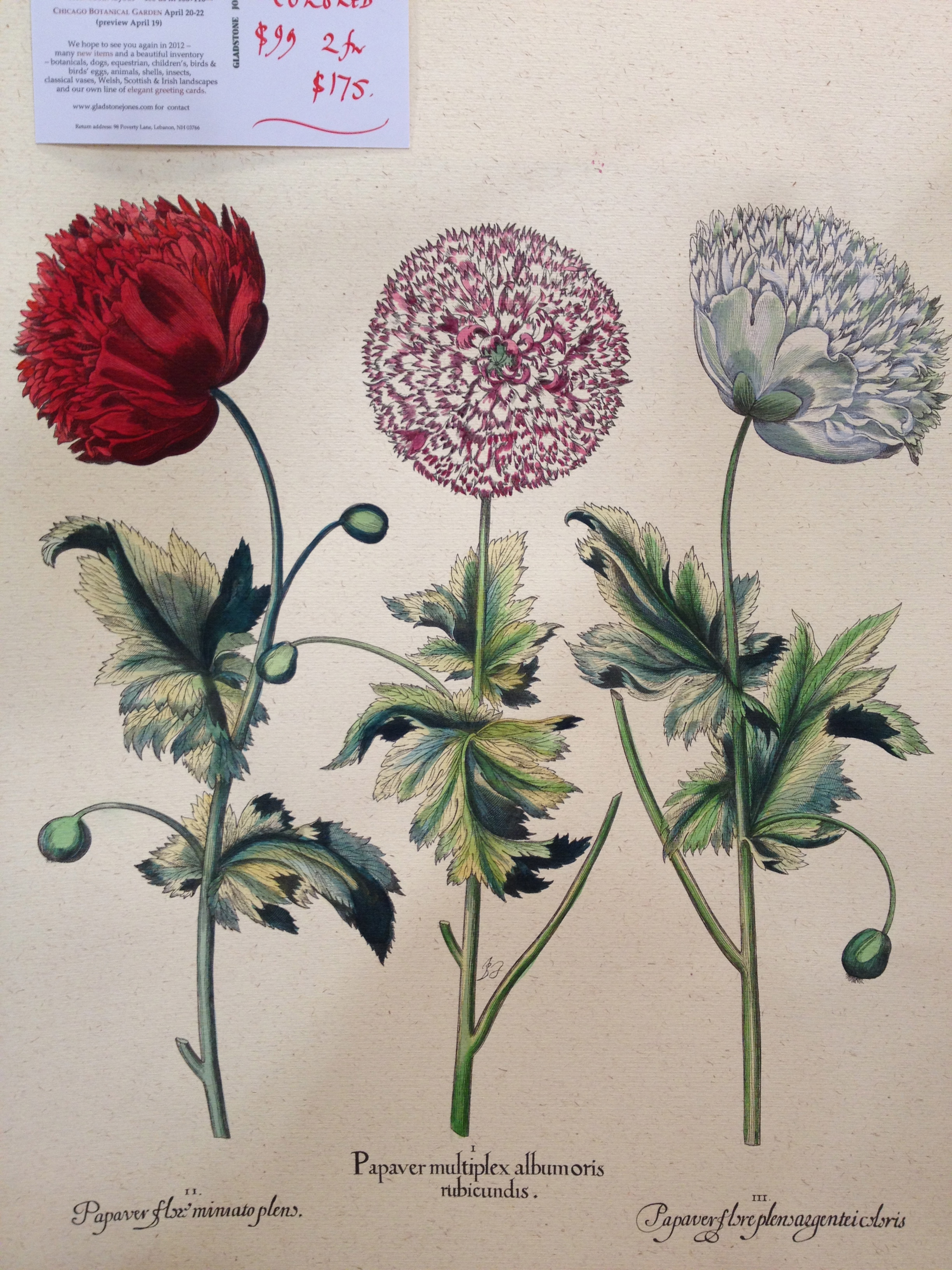
I want to fill a special room in a house I don't have with botanical prints

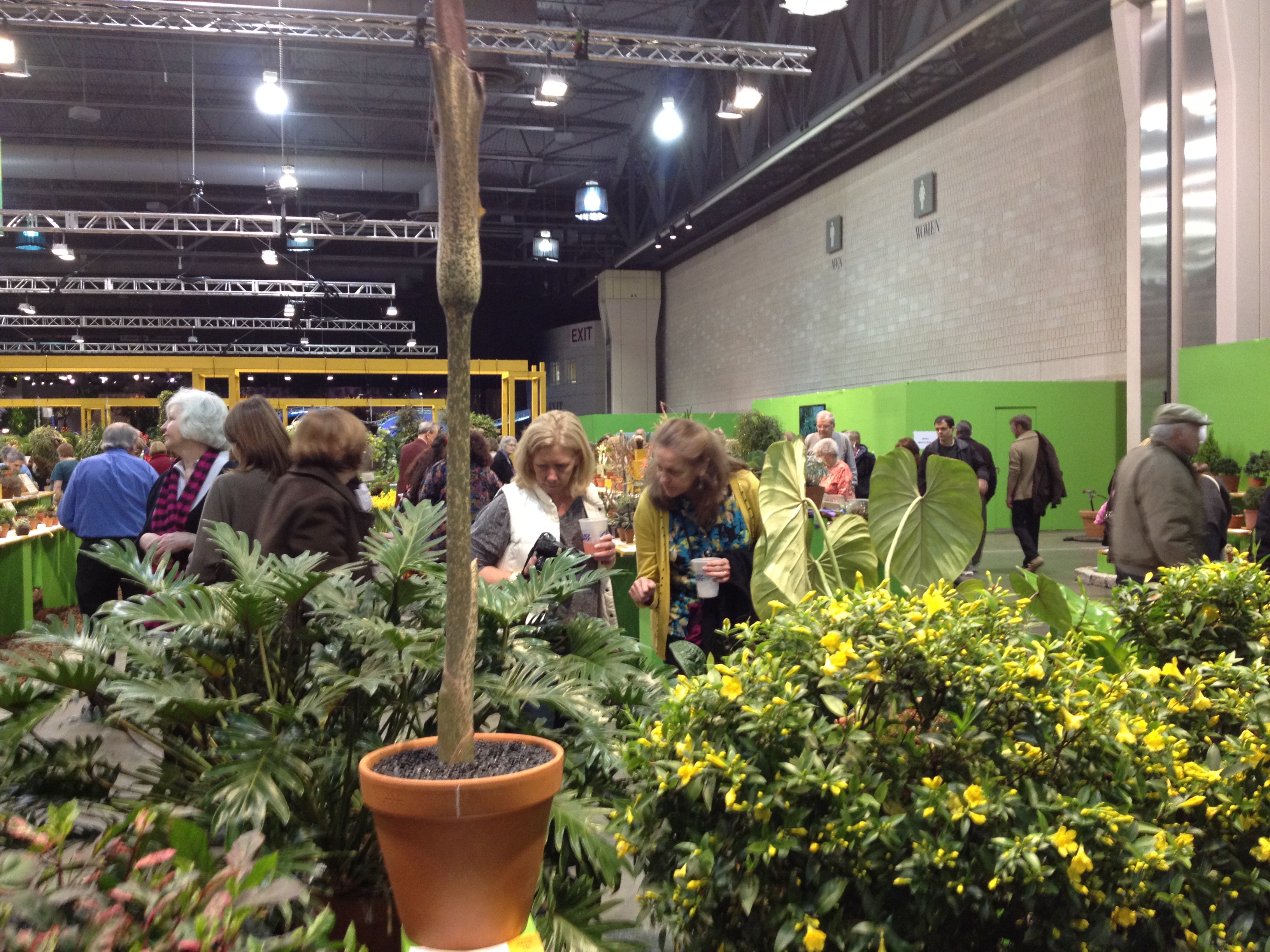
Ladies, look over here at the Amorphophallus!

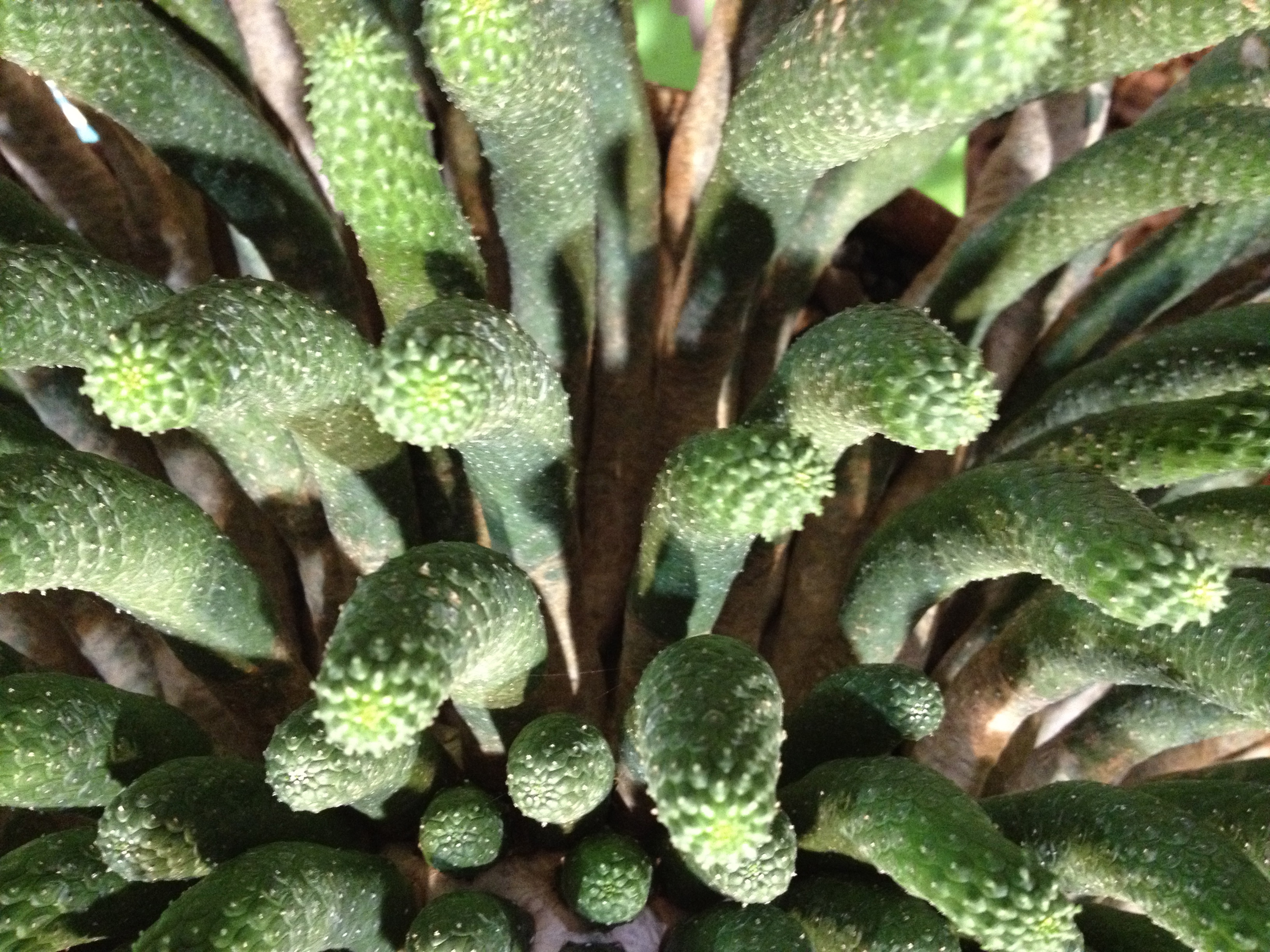
Prizewinning Euphorbia esculenta

I feel this way sometimes - it's a good thing

Don't you just hate when that happens?

'Outrigger' - Winning design by my instructor Jane Godshalk! Judges called it "brilliant"

My sister Amy took a lot of great pictures on a much better camera than mine – check them out HERE.

intro to ikebana class – longwood – day one

“Clear your mind.  Relax.  Let the plants speak to you,” says instructor Janet Solomon, during day one of Intro to Ikebana at Longwood Gardens.  Ikebana means “living flowers,” is nature focused and is a ‘do’ or way of life in Japan that’s considered a lifelong journey.  So, in other words, don’t expect to really know much after two days.  But after two days, Janet says, “your designs will be affected.  Number one, you’ll stop picking large bouquets and start using space differently.”  The biggest lesson here: less is more.  In Western arranging, we’re taught to use mass – building tightly packed, dense designs – and our emphasis is on color.  In Ikebana, the emphasis is on the line (and sometimes you must trim your plant material a lot to attain the lines you’re seeking.)  The asymmetry creates open spaces which invite the eye to explore.  The beauty is in the form and growth of a plant rather than the color.  The composition communicates the feelings of the arranger, and if you’re really doing Ikebana correctly, you might say something like: “the flowers just wanted to be arranged that way.  I listened to them, and that’s what they told me to do.”
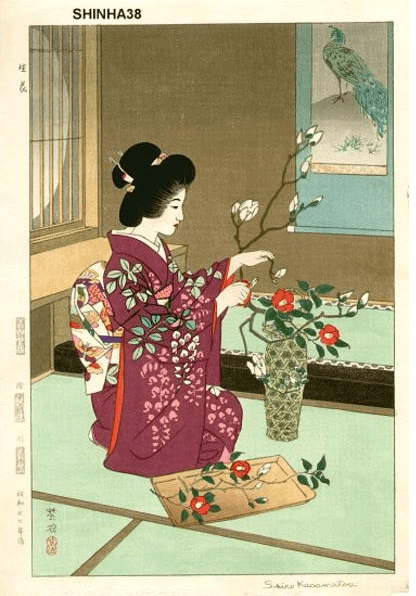
Ikebana Woodblock by Kasamatsu Shiro 1954

In Western arranging, we’re also focused on blooms rather than leaves and branches (though in our Basic class Jane uses plenty of branches and foliage.)  And not just blooms, but the perfection of blooms at their most perfectly open moment.  In Ikebana, imperfection is embraced.  A holey leaf is holy.  And the flowers are shown in different stages to represent the passage of time:  a fully open flower = the past; partially open flower =present; and a bud = the future.  Thus the choice in Western arranging of fully opened blossoms is considered “pitiable” in Ikebana, because these forms only represent Death.  “Not a pretty thing,” says Janet.  But in Ikebana, using seasonal items that are not “perfect” brings nature into the house and allows us to reflect on the concept of time.

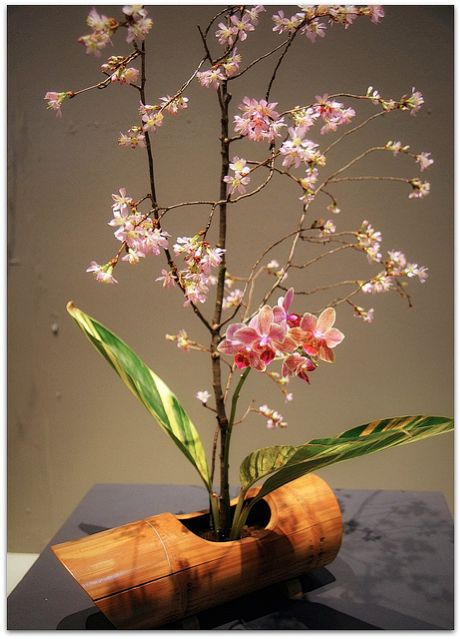
Ikebana arrangement at Philly Flower show - plenty of buds - photo by Amy Kane

As you can see, there is a lot of symbolism, and a reverence towards nature.  That’s because Ikebana’s genesis was religious, synthesizing elements of Shintoism and Buddhism.  This is cool stuff:  in Shintoism, the indigenous religion of Japan, nature is sacred, and contact with nature is a way of being close to the gods.  The monks would offer entire plants – root and all – to the gods. This is the basis of arranging at its most primitive.  In the 6th century, Buddhist monks gathered flowers and branches left after storms and arranged them at the foot of Buddha statues.  And that was where Ikebana sprang from.  I love these ideas because they express some of my own feelings about nature/plants.  I’m not religious, but I do hold nature sacred.  Gathering plant material from the outside, and putting it in a container in a design that enables me to connect with the material is an offering of sorts.  To Mother Nature, as I call her.

another Ikebana from Philly Flower show - photo by Amy Kane

Then Ikebana took off, and evolved into many styles.  These many styles include  (short-hand of my notes from class not meant to be exhaustive by any means): Rikka – 10-20′ high, these designs were microcosms representing mini landscapes complete with hills rivers and towns. Chabana – 17th century, these accompanied the tea ceremony (cha = “tea”) and held one branch and small flower.  Shoka – late 17th century, Shoka answered the need for something between Chabana and Rikka that could be ‘for everyone.’  These designs are asymmetrical triangles with open spaces.  Stems are tightly bundled at base to resemble single growing plant.  More on this, we made one!  Nageire – chabana “on steroids.” Tall narrow container.  More on this later, we made one!  Moribana – “piled up flowers” from the late 19th century.  Low rectangular container. More on this later, we made one!  Free style – these designs use the same design principles as Western arranging but still represent nature.
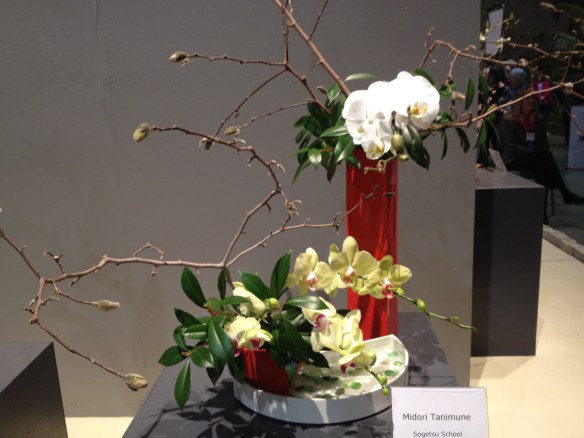
Ikebana arrangements at Philly flower show by Midori Tanimune, Sogetsu School

And just to make things more confusing, there are a bunch of different ‘schools’ of Ikebana that all have different rules about how to create these various styles.  Janet studied at the Ikenobo school, the oldest school with the most traditional styles. But there is no competitive spirit in Ikebana – unlike Western flower arranging where a blue ribbon won at the Flower show is the ultimate.  “Japanese flower arrangements are for pure enjoyment and never judged,” says the Ikebana International brochure.  But honestly I do detect a tiny hint of condescension from Janet that her way is the better way of doing things, that us poor Western saps are lost in our notions of perfectly rounded radial designs when we could be communing with nature and really doing something of spiritual weight.  I’m trying, okay?  That’s the point of all of this floral design stuff for me, actually: to find something that fulfills me, and balances me.  Where I use my head, heart and hands.  So far, so good.
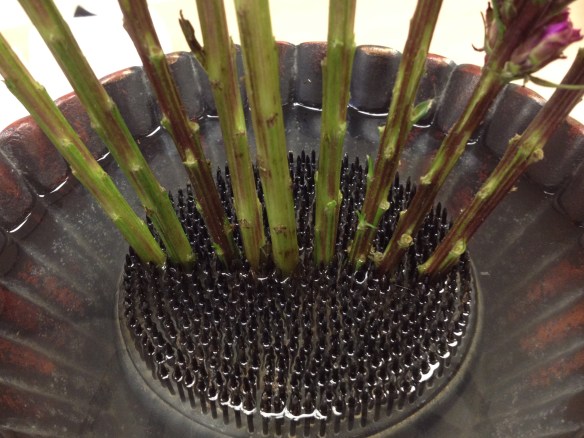
Shoka rules - straight line, center of kenzan, fanned out, clean above water line

Okay, now we are to make a Shoka Shimputai.  That’s a straight line arrangement.  The Shoka rules: all the stems must be placed vertically and in a straight line centered in the kenzan (the spiky frog or “sword mountain” that holds stems in place – watch out, very sharp!) and the materials must be free of leaves measured in a fist height above the container (the mizugiwa – edge of water.) Then the materials are fanned out to “let the materials breathe.”  The Shoka will be viewed from the front, so if you’re using any big leaves, be sure to angle them so that they’re not too overwhelming and to create more depth.  Depth is a big thing in Ikebana.

Shoka Demos by Instructor Janet Solomon - from the side to show fanning out

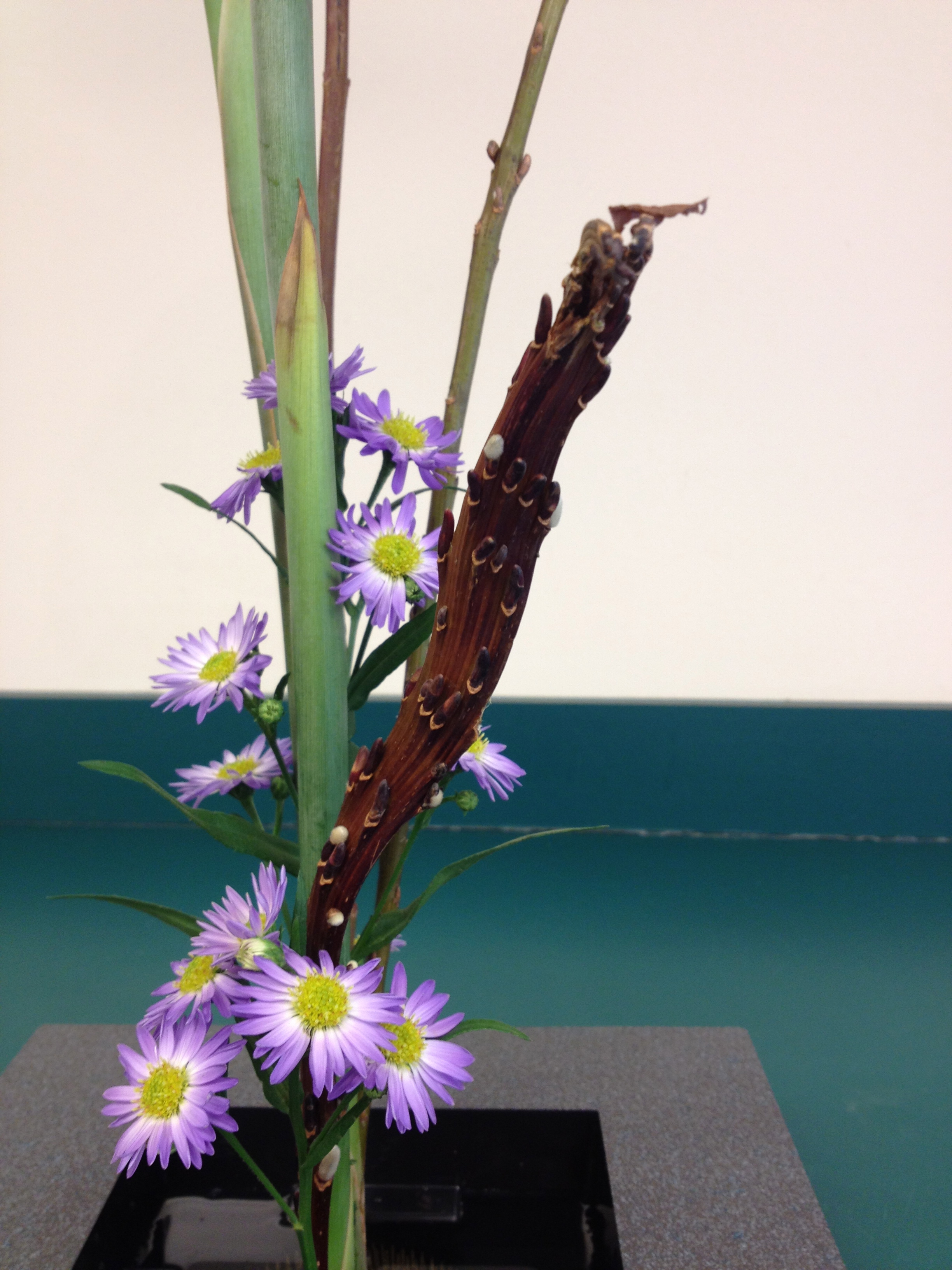
There are only 3 types of materials being used in the Shoka Shimputai.  We are using Bird of Paradise, Aster, and Willow (some of us have fasciated willow – oh baby!)   First you must choose your Shu, or the main actor in the play, the dominant force.  Obviously the Bird of Paradise here.  Janet shows us how to coax the flowers out of the triangular buds by digging our thumbs in and gently pulling the blooms out (there are up to 3 ‘birds’ inside.)

emerging bird - you can gently dig out the blooms with your thumb!

Then the Yo or supporting actor, which is meant to contrast with the Shu but be subservient.  This is the Willow for me.

Fasciated willow - Yo; purple aster - Ashirai

After that, the Ashirai goes in, which is the helper that fills in if seasonal materials are needed (there always must be something seasonal.)  The Ashirai balances things, can supply color, and ties things together.  The Aster.  I found this arrangement pretty easy, but this was my first time working with a kenzan, so I had to master that.  Once a big branch of willow goes in, it’s pretty hard to get out, so it’s a good idea to hold things in place where you intend to put them before sinking the stems in.

my completed Shoka shimputai (should be sitting on a 'base' - protects from drips)

So you see how the Bird of Paradise is dominant, the willow supporting, and the aster a touch of helping color.  And though she has stressed the fact that Ikebana is not competitive, there is a right and wrong way of addressing the basic rules, so she goes around and modifies some of our arrangements – to get a better line, to keep the stems straighter, or more fanned out.  Wrestling with the stems being straight is definitely difficult.

Janet modifies Julie's arrangement, whose feeling towards this first stab at Ikebana was "survival" which she more than achieved
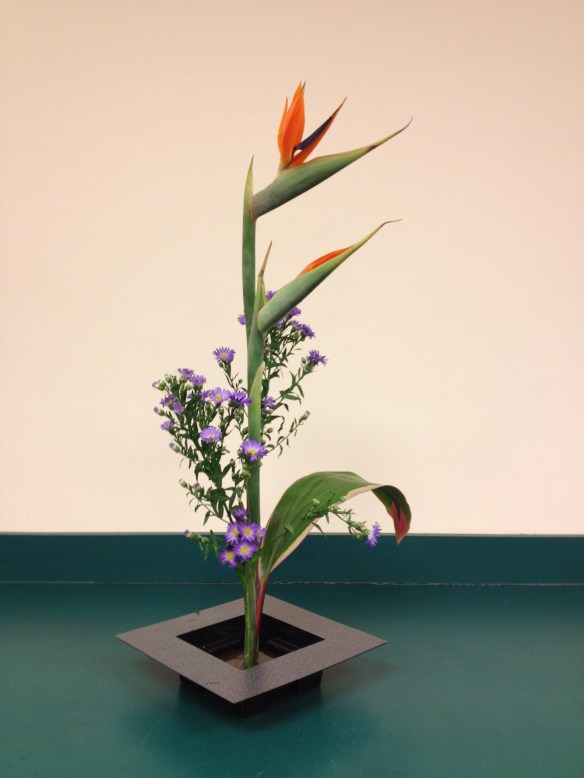
In this Shoka, the Aster is the Yo and the leaf is the Ashirai..I think

Pat's Shoka uses Bird of Paradise foliage, which still counts as the Shu. She clipped off the stems, wanting her design to be simple and clean to help offset the complexity of her life. Beautiful.

All in all I really enjoyed Day 1 of this class, though I did feel like despite it being emphasized that Ikebana is supposed to be non-judgmental, the instructor was actually very judgmental towards all of our designs and was not effective at communicating her thoughts in a gentle constructive way.   Day 2 was different in this regard…so stay tuned, there’s more Ikebana to come!

day three – basic floral design I at longwood

In this class, we started by watching a video from the ’80s on Conditioning.  Jane had some stuff to add that I’ve worked into the tips I took away from it:

  1. Recut stems on an angle / Strip lower leaves to avoid decay under water.
  2. Put flowers into water in a cool dark place for several hours.  This video said to use warm water (100-110 degrees F) because it has less oxygen and can freely absorb water and nutrients better because warmth dissolves trapped air.  Jane says warm water can also speed up the flowering process, so using cool water can help flowers last longer.  So if you wanted something to open up right away, warm water would be the way to go.  And let the water cool before you put it into a fridge, if that’s what you’re using for the cool dark place.
  3. pH level of water should be 3.5-4.5 – water flows through vascular system better at this level.
  4. Use only NON-METAL containers.   Cleanliness is next to godliness.  Wash all buckets, containers, and cutting tools with bleach solution.
  5. Use a floral preservative like Floralife to reduce flower senescence.  Preservatives contain Sugar (carbs for nourishment,) Acidifier (to lower pH level,) and Biocide (inhibits growth of bacteria.)
  6. Daffodils should be stored in a separate container because it’s sap is toxic to other flowers.  Once you cut them, and put them into water for a while, the stem will harden off and not seep the toxin anymore.
  7. Tulips are funny ones.  To get them ‘straightened out,’ wrap them in wet paper and place them in a deep container to keep them from bending.   Also bear in mind tulips keep growing after they’re cut.
  8. Woody stems – slit the stem across the center for maximum water uptake.  DON’T mash the stems!
  9. Lilies – pollen can stain so pull off the anthers. This also adds to their vase life.
  10. Euphorbia and Poppies ooze a milky sap when cut.  Singe them with a flame or super hot water to prevent the ooze factor.
  11. Iris – to get them to partially open you can peel them open a bit and blow on them!  This was the best part of the video, because it was just funny watching a guy from the ’80s blowing on Irises.
  12. Orchids – tropical – keep in warm temps not below 45 degrees F and out of sunlight.
  13. Gerbera need head support and are prone to stem blockage.
  14. Jane says the best time to cut Garden Flowers is the morning or evening.  Ideally, water them at night and pick them first thing in the morning. Give them a shot of hot water, then put them in cooler water and let them rest for 4-6 hours in a cool dark place.   THANKS JANE!

botanical design using tulips at every stage from bulb to fully open flower

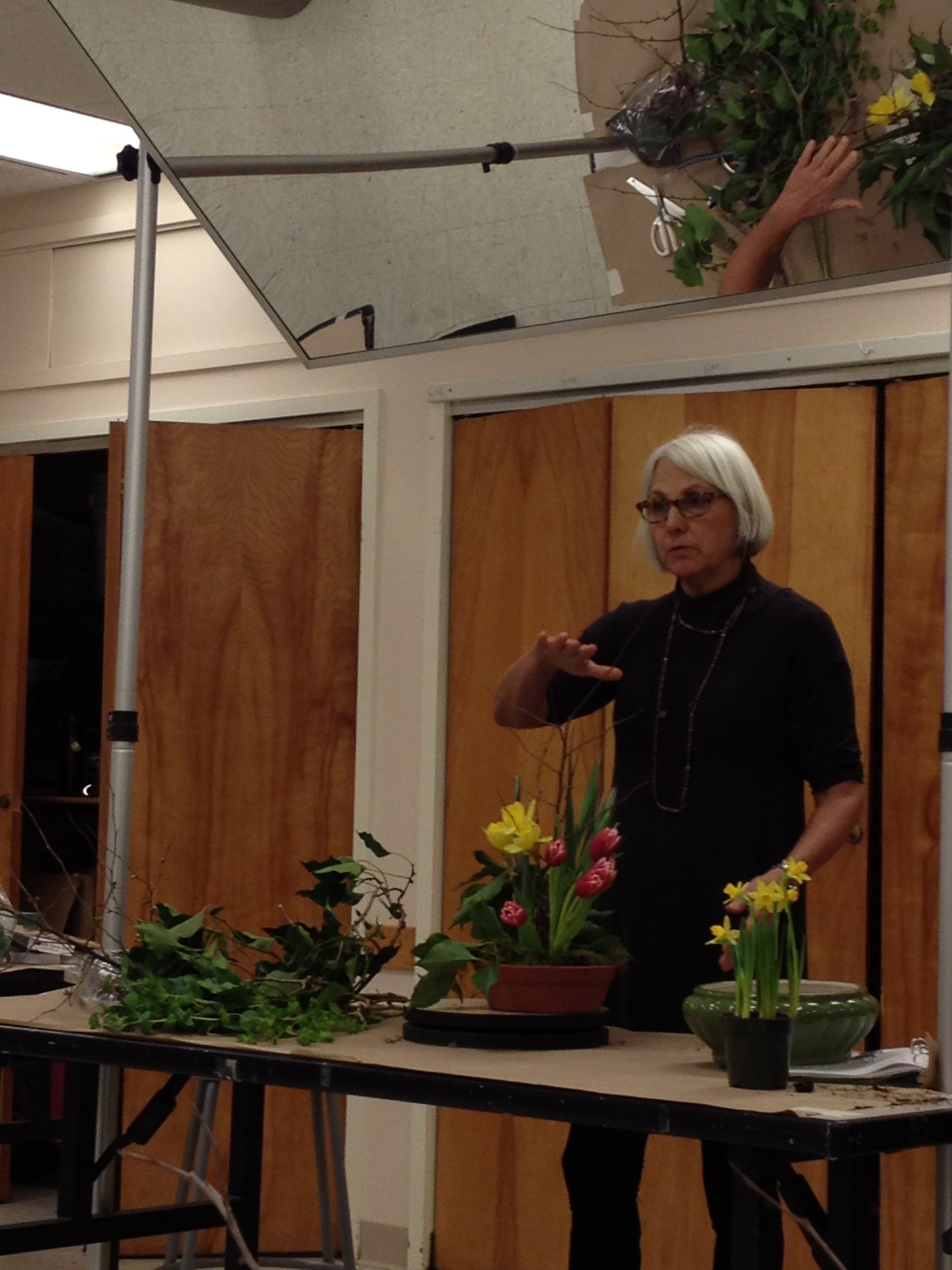
Jane then walked us through a few different arrangements before we did ours.  I really loved the Botanical design, which represents nature through the life cycle or study of a plant.  The design uses one kind of bulb flower in all of its phases, and the bulb on it’s own is included.  Cute!

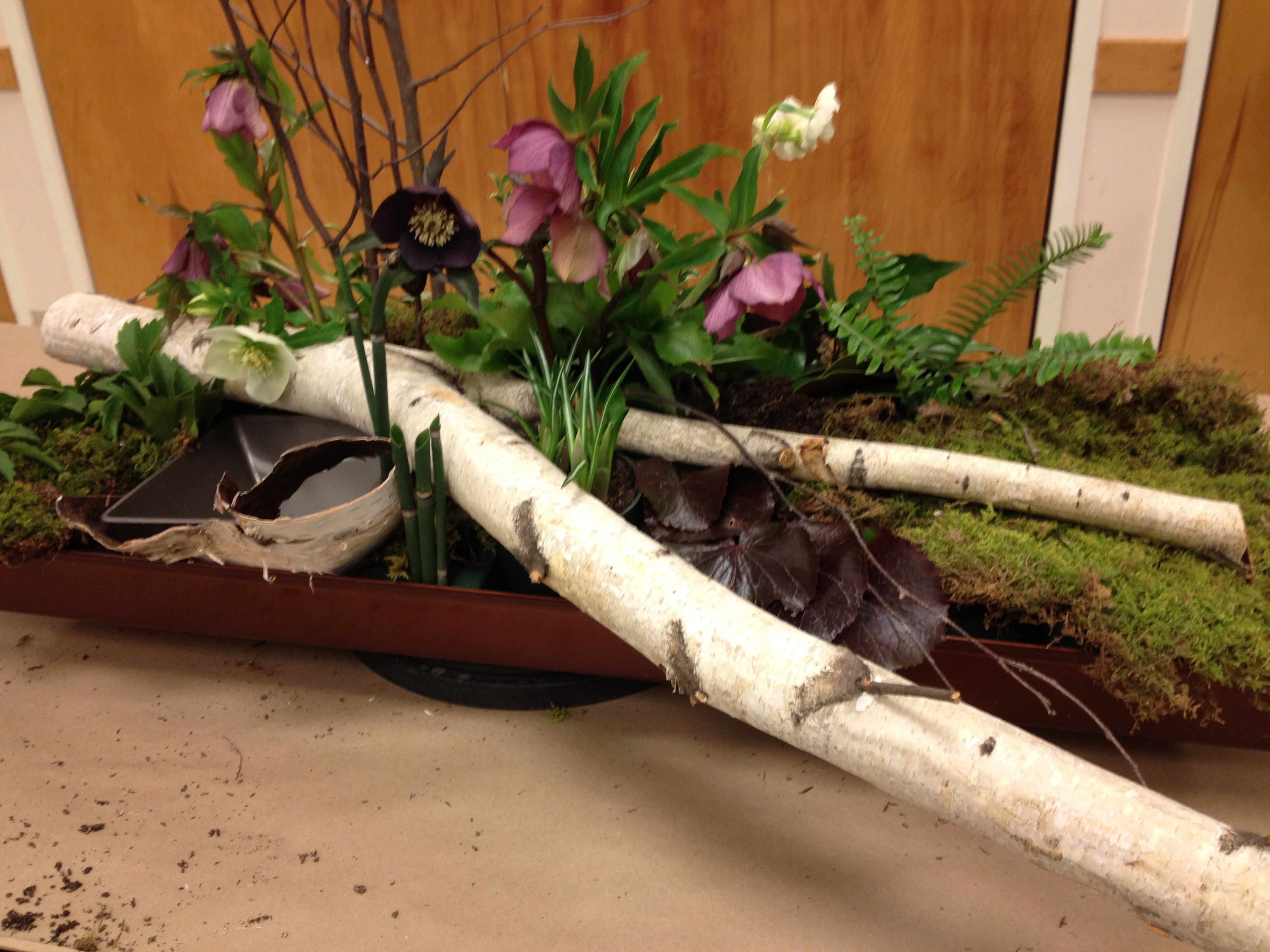
Jane doing the landscape design using birch, moss, hellebores, tulips and more

Then the Landscape Design, which is a panoramic view of a man made garden area.  It’s a larger design and includes trees, bushes, flowers and ground cover.  Also you can use a little water element if you want!  This “would be perfect if you were having a bunch of gardeners over for a dinner party,” says Jane.

Landscape design - Jane did this in about 10 minutes

Today’s lesson was a Vegetative Arrangement, which is meant to be a design that presents plants as they grow in nature or the garden.  Flowers and foliage are selected according to seasonal compatibility – so you wouldn’t see a sunflower in with a daffodil because they wouldn’t be blooming at the same time in the garden.  This ‘slice of garden’ should show interest from all sides and bear in mind Color, Fragrance, Texture and Pattern.

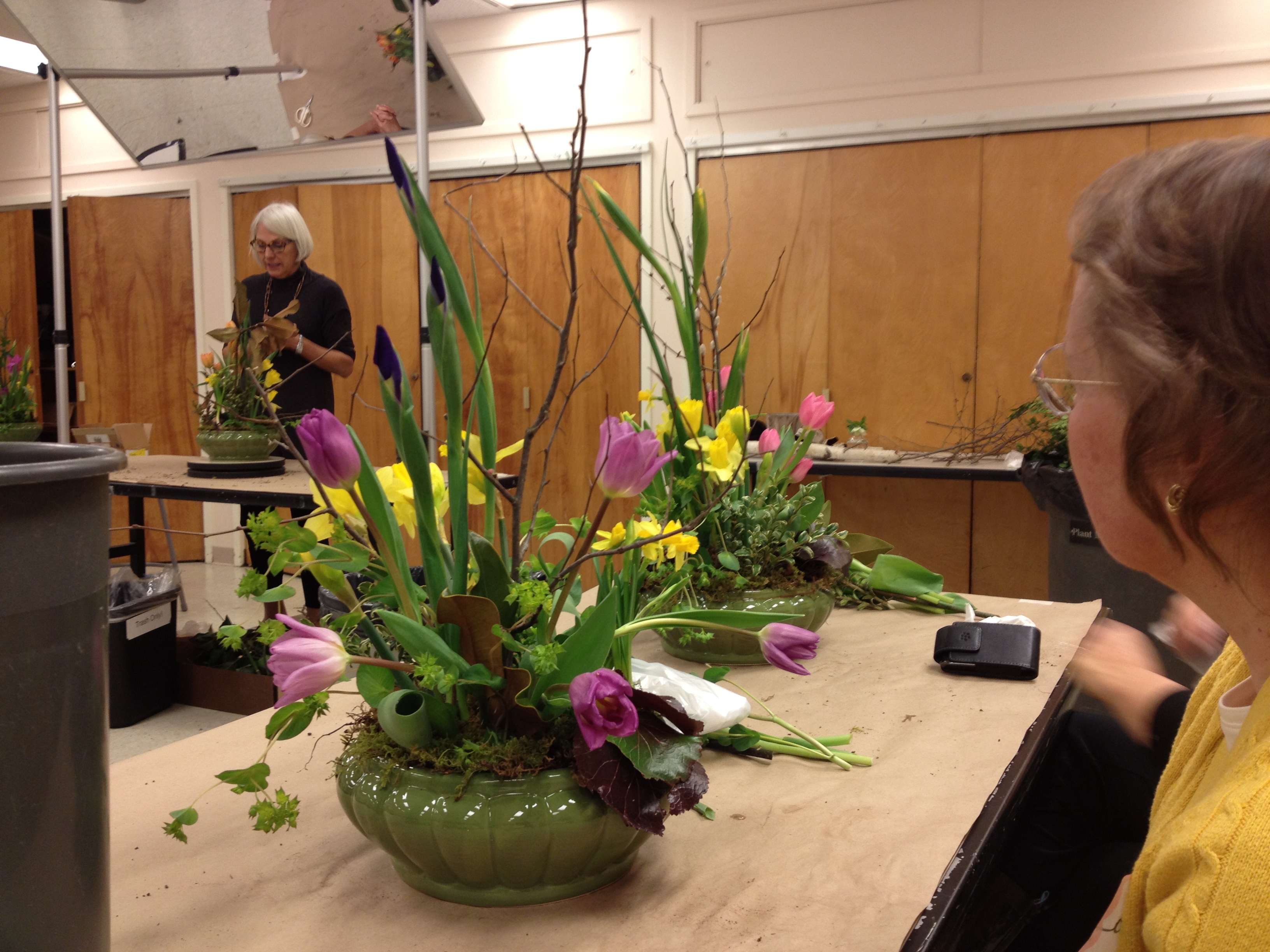
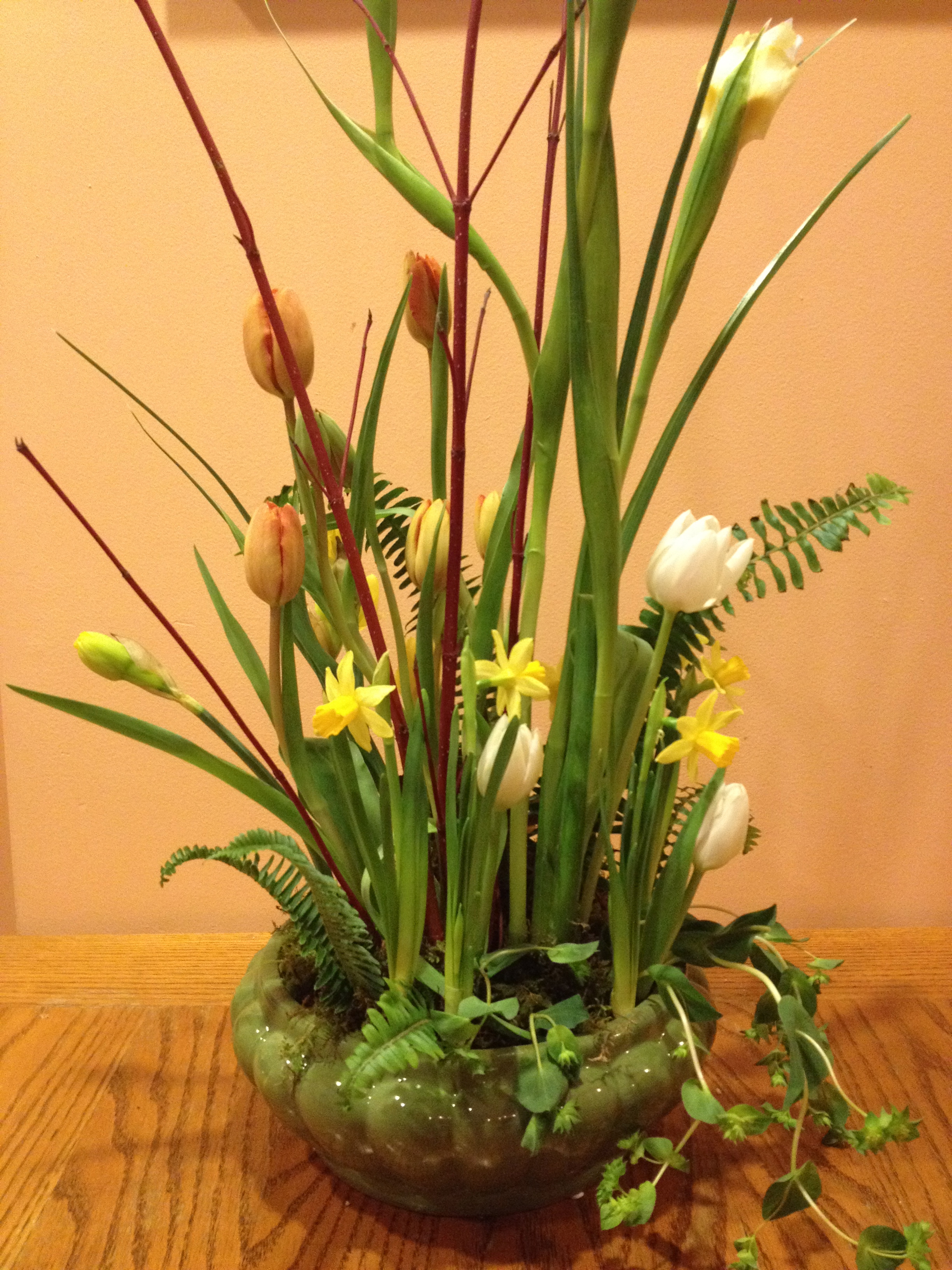
Radial Vegetative Arrangement "think about how it might be growing"

I decided to do the Radial Design rather than the Parallel Design.  We used 1 block of Oasis cut to fit the container, then pinned some moss on using greening pins but leaving the center exposed.  Our materials were 1 Quince Branch (or Red Stemmed Dogwood – limited supply,) 3 Daffodils, 5 Tulips, 3 Iris, 1 pot of Tete a Tete Daffodils, and lots of different foliage to choose from like Bupleurum, Ivy, Fern, and 3 Galax leaves.  The Galax is shiny shiny shiny and draws your eye.
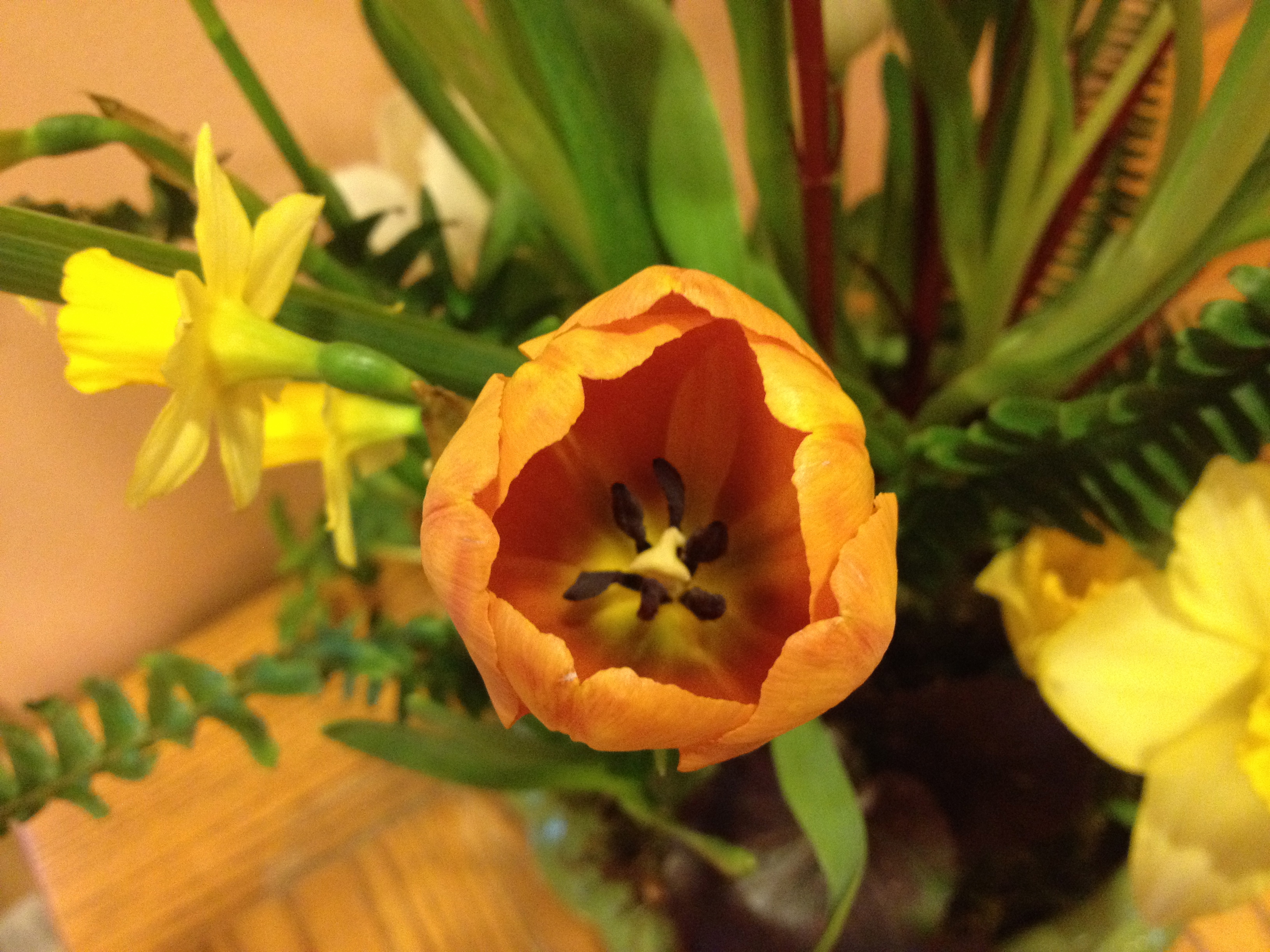
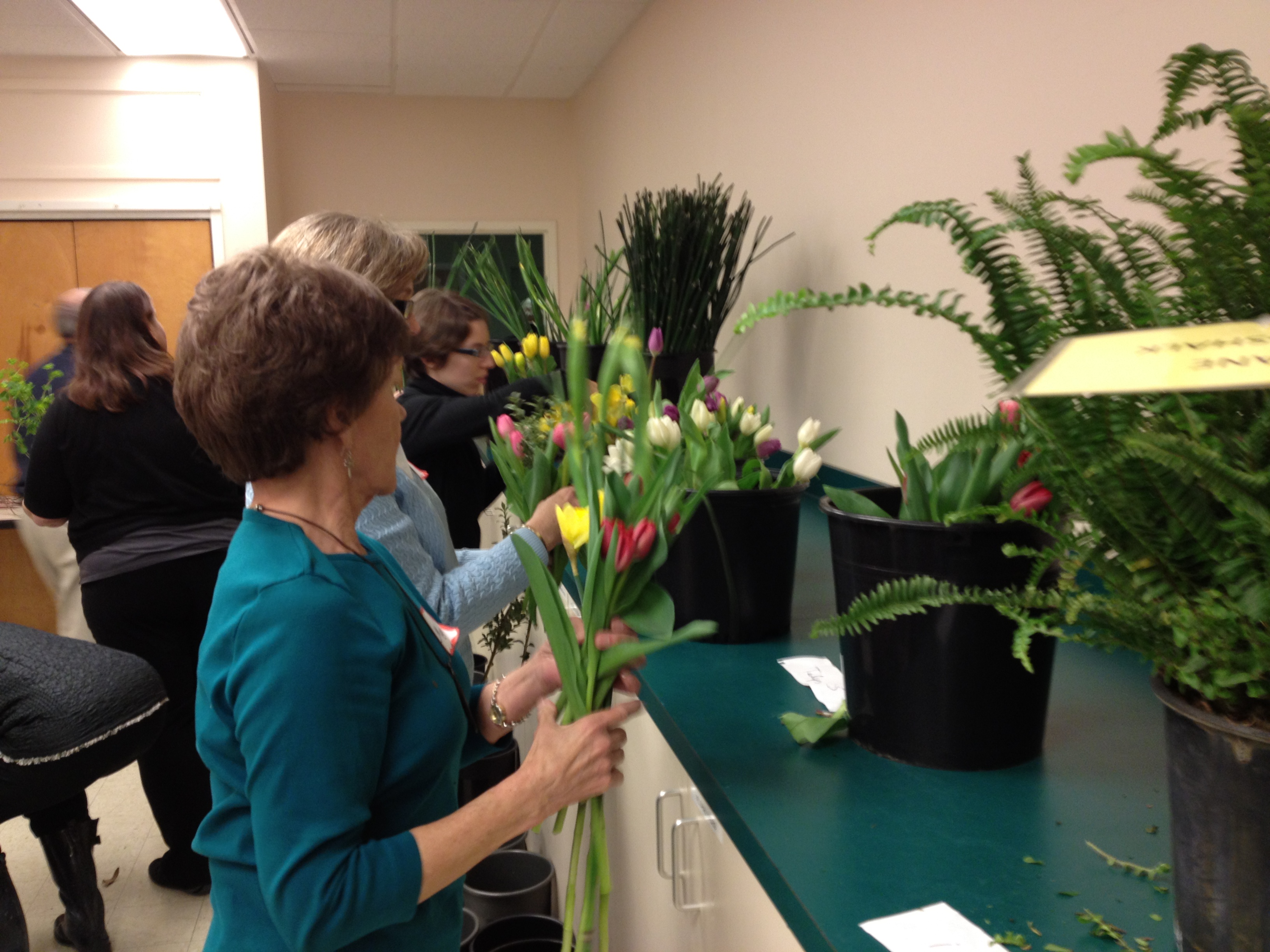
Mary Jo grabs tulips! You've got to be brutal to get what you want in this line. 🙂

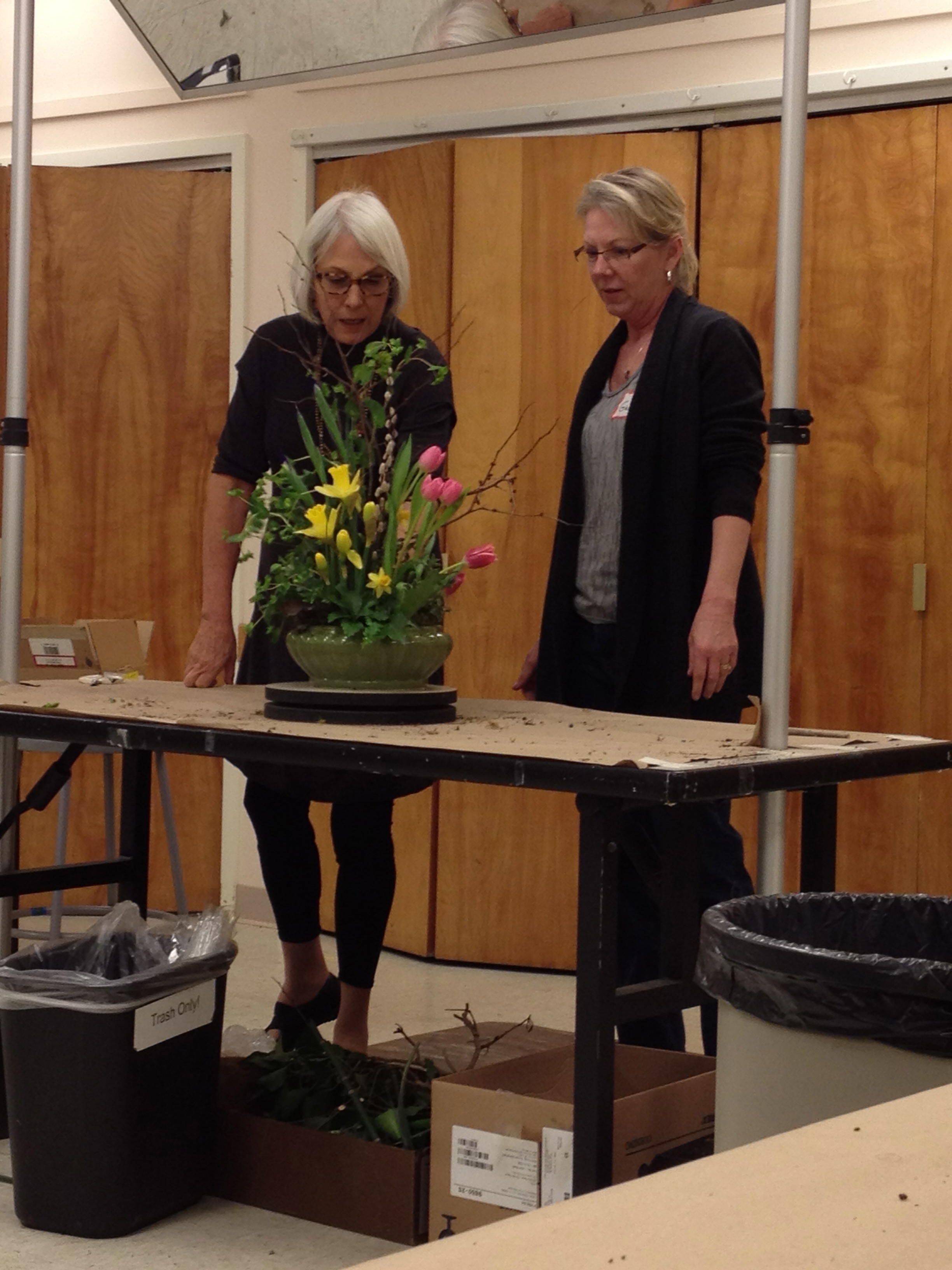
after you've done the assignment, each student goes up and the class and Jane interact to discuss the design, what works and what doesn't. This one worked!

afeefa was lucky to grab some of jane's hellebores ... mmm!

This design was definitely harder for me than the Roundy Moundy.  I struggled with the Quince Branch, was not happy with it, and then Jane came around and gave me some Red Stemmed Dogwood which worked better with my orangey tulips.  I took the following pictures once I got home:

my vegetative arrangement when it first came home

other side, i like the dripping bupleurum meant to mimic lady's mantle

about 5 days after it was made, irises blooming, tulips going nuts, and tete a tete much leggier

I just want to pinch it’s cheeks and say, “My how you’ve grown!”

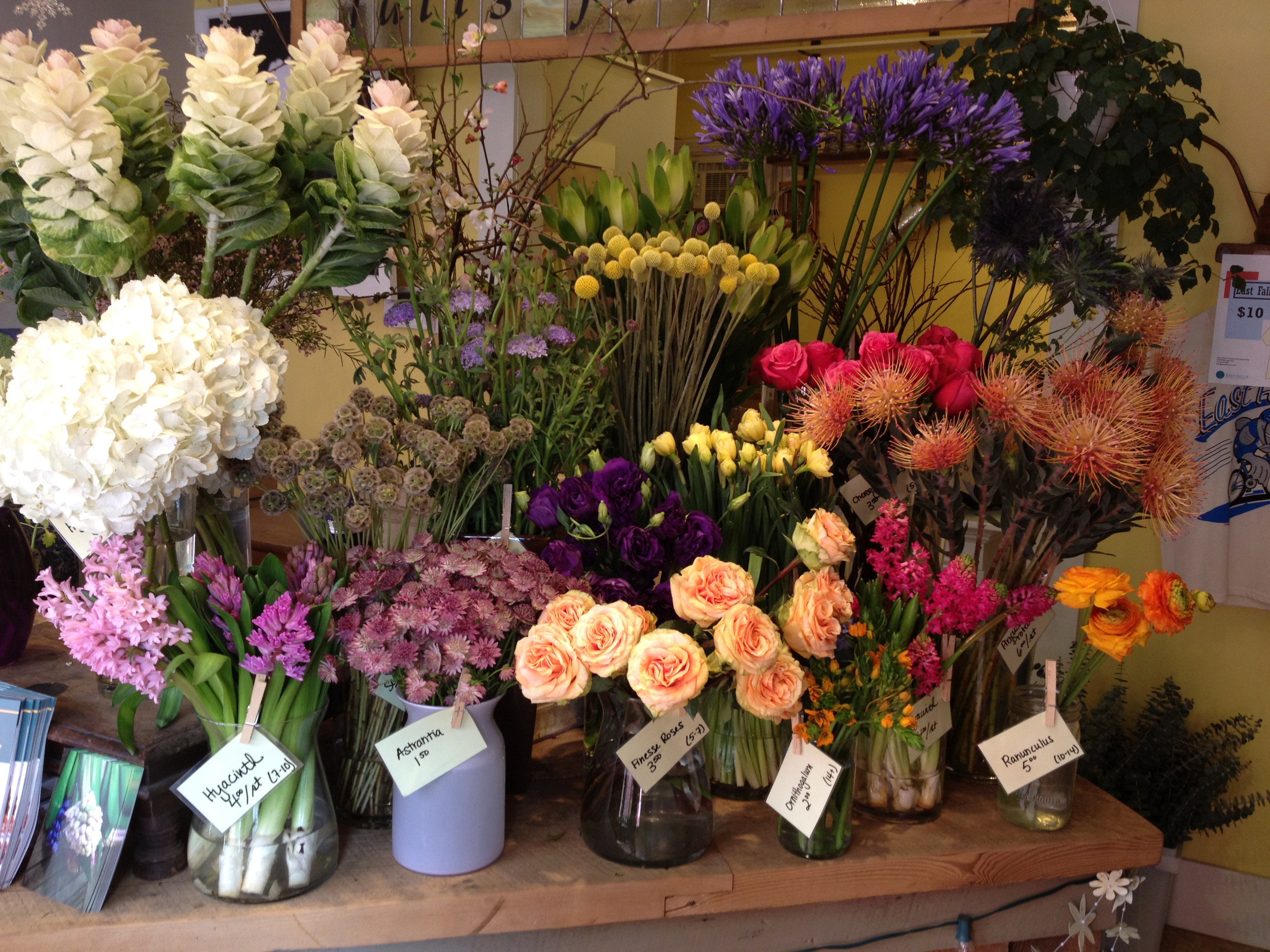
floral offerings from falls flowers

Walking into falls flowers last week, I was greeted by many hues, shapes, sizes and textures, all standing at perfect attention in their containers filled with fresh clear water. No flower food is needed for the display, because we change the water and cut fresh stems fairly regularly.

selection of goodies

So you want to dive in a little closer??? The first thing I noticed was this pincushion Protea – totally out of this world! Also known as Leucospermum cordifolium, the alien flower heads probably come alive at night and party at the shop. They probably like to dance to Bjork.

pincushion Protea

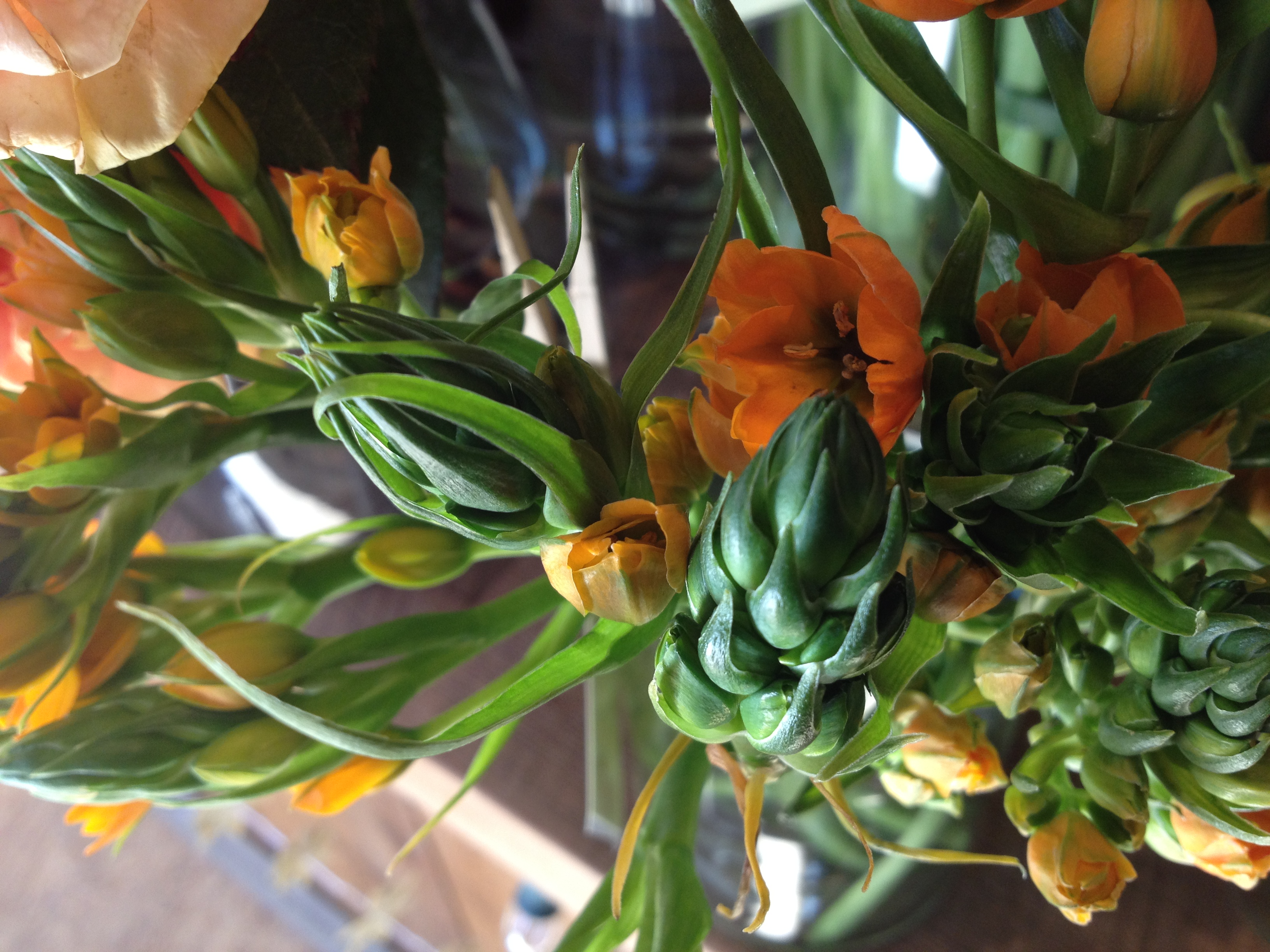
Eager to join the party are the orange Ornithogalum, or Sun Stars, a perennial bulb native to S. Africa.

Orange Ornithogalum starting to bloom

But during the day, the shop is mostly quiet. The flowers stop their dancing and become still enough for us to admire them. In fact, Peicha and I were talking about the cycles of life and death, when a few calls came in for sympathy arrangements. I think it’s nice to send flowers to someone when their loved one dies. It is a vase of life right before you, to remind you: we are not here long, but while we’re here we’ll do our best and brightest work. I chose the flowers and Peicha made the arrangements. We were very in tune on this day.

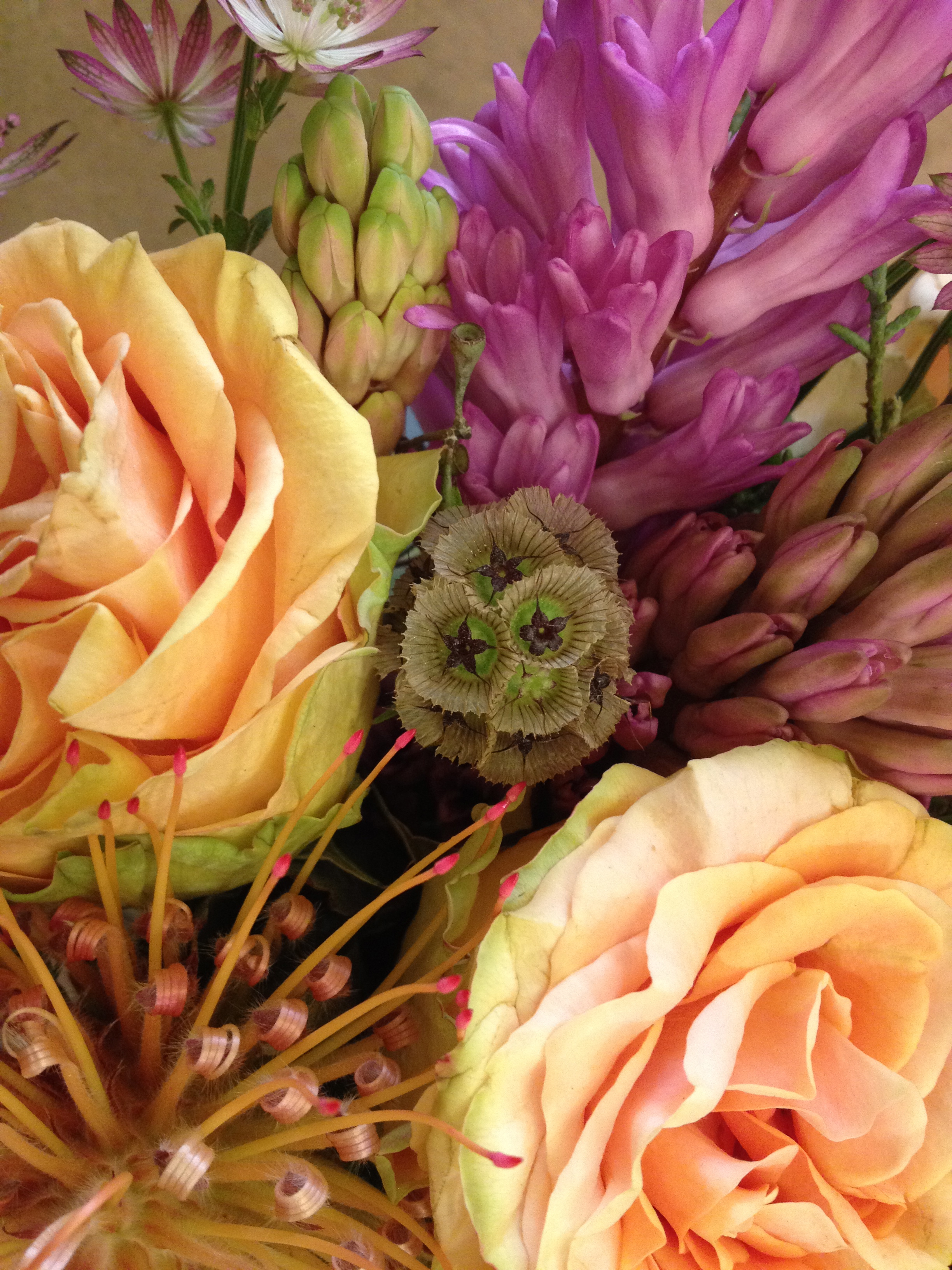
arrangement using: Finesse roses, hyacinth, pincushion protea, scabiosa seed pod, astrantia

arrangement using: eryngium (thistle), agapanthus (purple) white kale, white hyacinth, blue lace flower, tweedia (light blue)

sympathy arrangements ready for delivery (pussy willow added to the blue/white one!)

And then I got to deliver these. Neither recipient was home, so I left them with doormen or got instructions directly from the client about where they wanted them left. Funny thing, talking about cycles of life, I drove past the house I grew up in as a little girl getting to one of the deliveries!

Tweedia. You're blue, and your leaves are soft to the touch. I love you.

day two – basic floral design I at longwood

I was eager for class #2, possibly because I felt a little more confident after the previous weeks of floral experience at the shop, and because it seemed we’d only scratched the surface during class #1.  There’s so much to learn when you’re dealing with plants, and that’s part of the reason I like it.  I never want to run out of new things to learn.

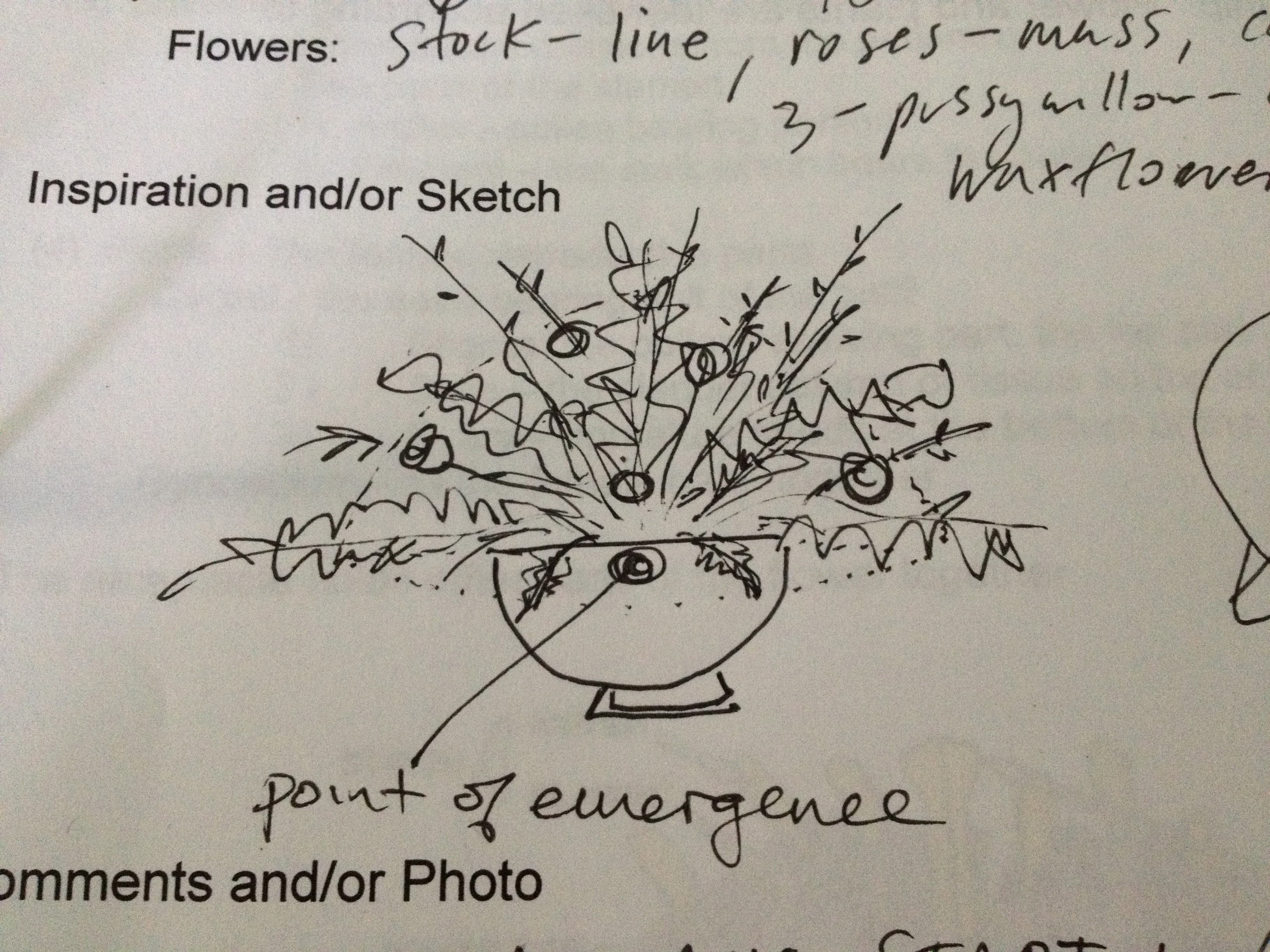
We are encouraged to make a little sketch before we begin, this is mine.

While waiting for the rest of the class to show, a few students and the teacher were discussing the upcoming Longwood lecture on Sustainable Floral Design.  Someone wondered about the lecturer, Jane Clark, and because I had been researching this topic, and her, I piped up that she had once had a shop called Fleurish which was no longer in business.  Our teacher’s immediate reply was, “that’s because you can’t do sustainable flowers.  Is organic impossible? To be competitive, yes it is.”  She went on to say that if you’re bidding against a non-sustainable florists, their prices are always going to be lower.  Organic flowers cost much more. But..isn’t there a market (maybe small, yes) of people who want “green” flowers, who don’t want the flowers at their wedding flown in from Columbia, dripping with pesticide? This will be a big topic for me, I think, and I’m just starting to research how others approach it.

Locally grown arrangement created by Jennie Love, photo courtesy of lovenfreshflowers.com

Some just grow their own flowers and are done with it.  You have to admire that approach, and that’s why someday I want to meet Jennie Love, proprietor of Love ‘n Fresh Flowers.  She grows her own flowers in an urban location, which she sells through local stores and a Flower CSA, and also creates unique floral designs for events such as “eco-lovely weddings.” She’s doing a Floral Fun class at Longwood in the summer I hope to attend.

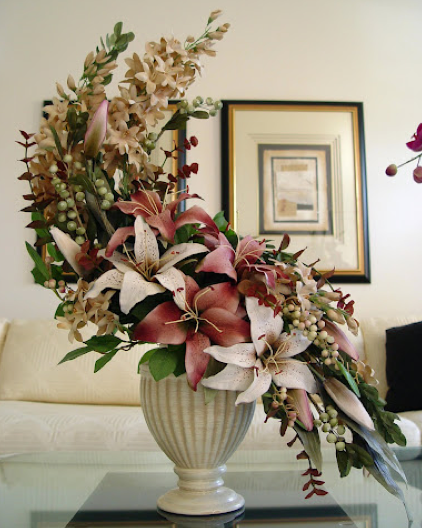
Arrangement in shape of Hogarth's Curve of Beauty

Ok, back to class.  We discussed the Shape of floral arrangements.  They can be round, horizontal, crescent, vertical, oval, symmetrical and asymmetrical triangle, fan, Hogarth (curve of beauty,) or parallel systems.  Gosh, I hope I never have to make a Hogarth arrangement…too hard!  We talked about Balance, Proportion and Scale within the context of these shapes, and then moved on to the flower and foliage forms.

Lily is example of a Form Flower - distinctive shape - this has been blooming for 2 wks

For example, line Flowers are linear in shape, and create height in an arrangement.  Like Delphinium, Snapdragon, etc.  Form flowers have distinctive shapes which add interest to a design: like Gerbera, Amaryllis, Lily.  Mass flowers are solitary flowers with a single round head like Roses, Carnations.  Filler flowers – Baby’s breath, Waxflower, Queen Anne’s Lace.  And then the Renegade flower is one which may be used as more than one type or just doesn’t fit into any category, like Bird of Paradise.

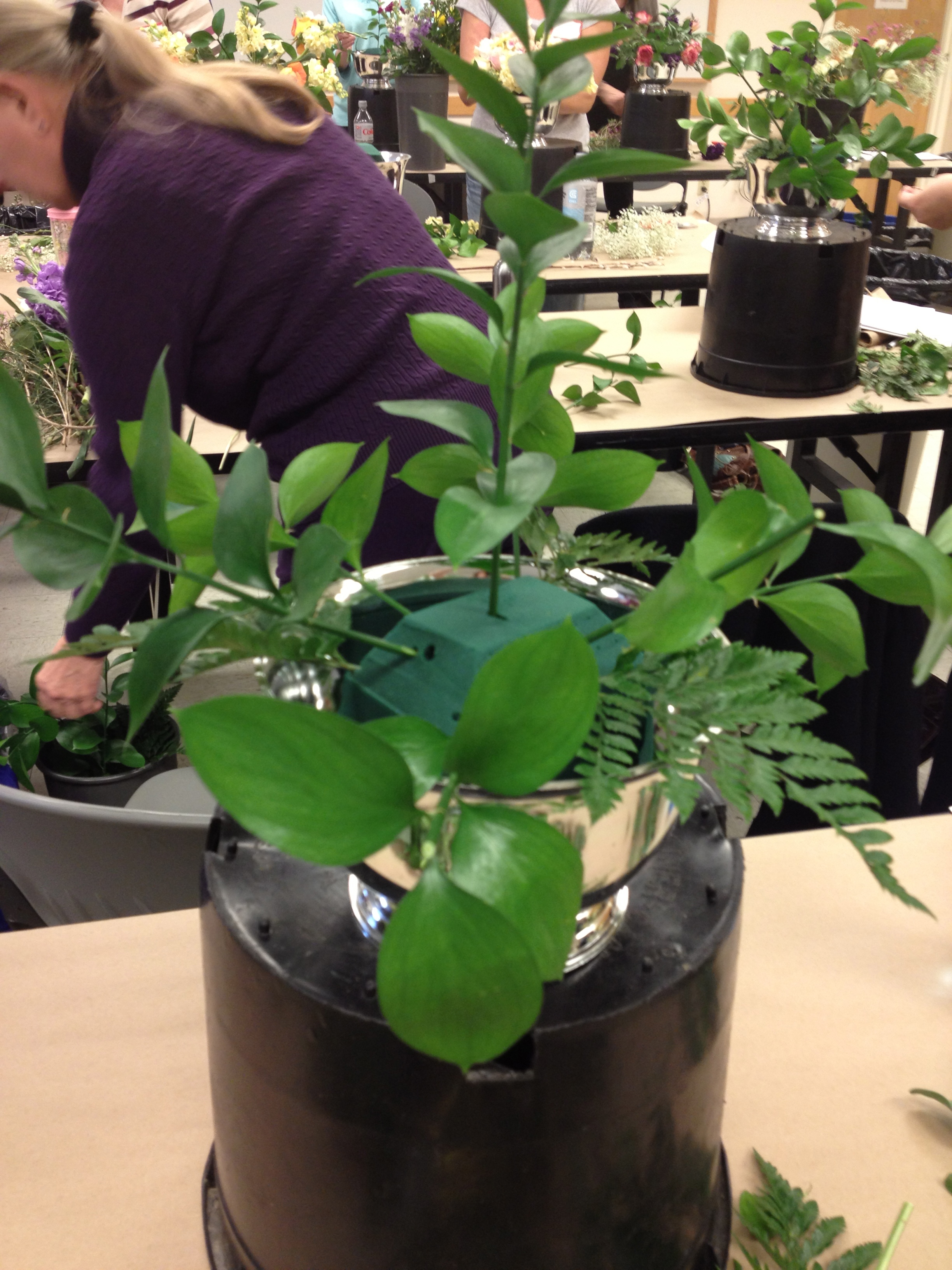
Florida Ruscus is 'mass foliage' hiding the mechanics, baker fern is filler and adds a dainty edging

Similarly, foliage has its’ forms as well.  Linear like spiral eucalyptus, flax, or some grasses.  Form foliage has an interesting shape or texture, color or pattern, like papyrus, monstera leaves, caladium.  Mass foliage adds bulk and covers the mechanics of an arrangement, like pittosporum, huckleberry, camellia, leatherleaf.  Filler foliage is smaller in scale and sometimes wispy, like fern, boxwood, ivy.

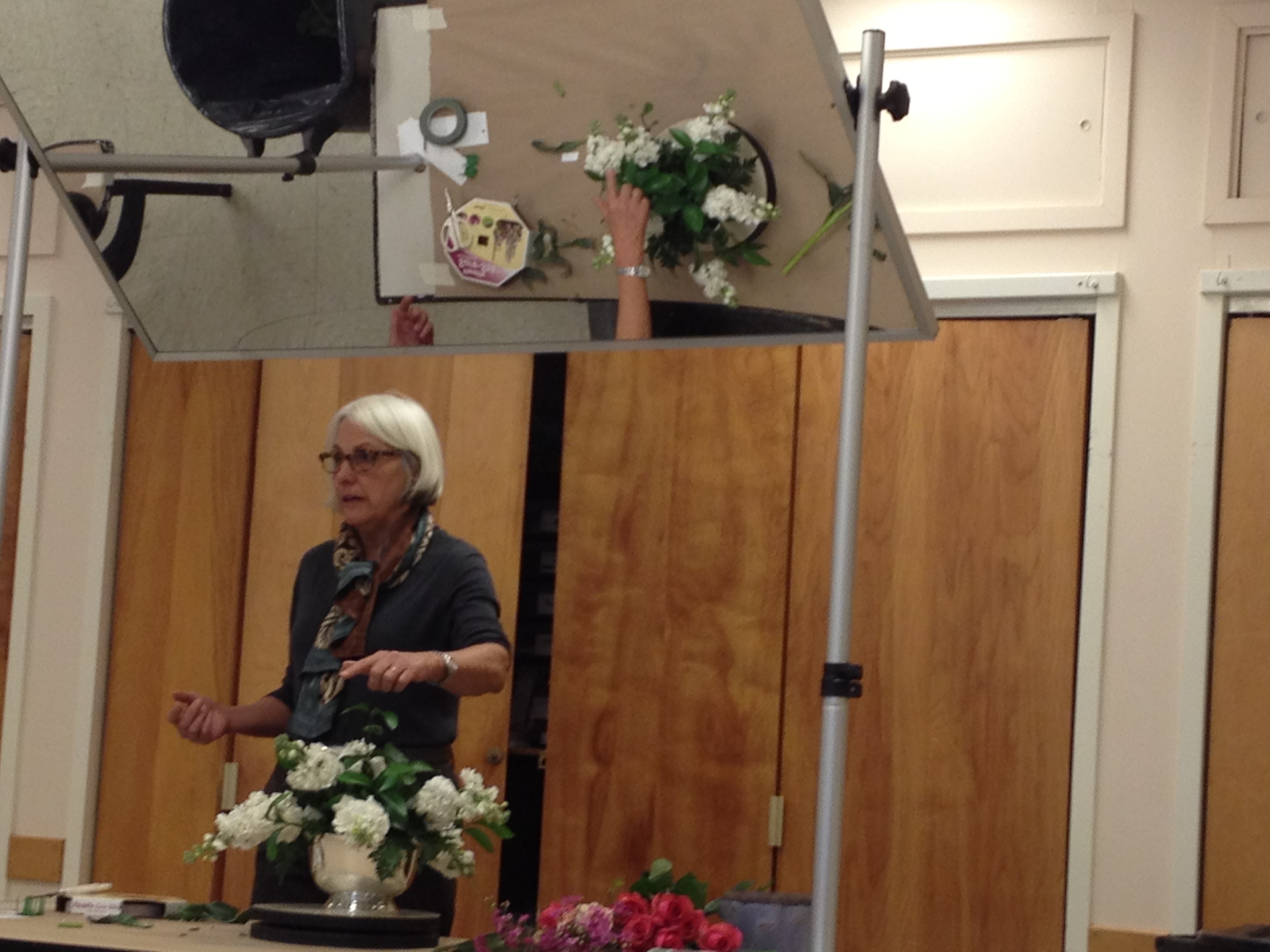
After the greens, Jane adds stock flower - the "line flower" always goes first

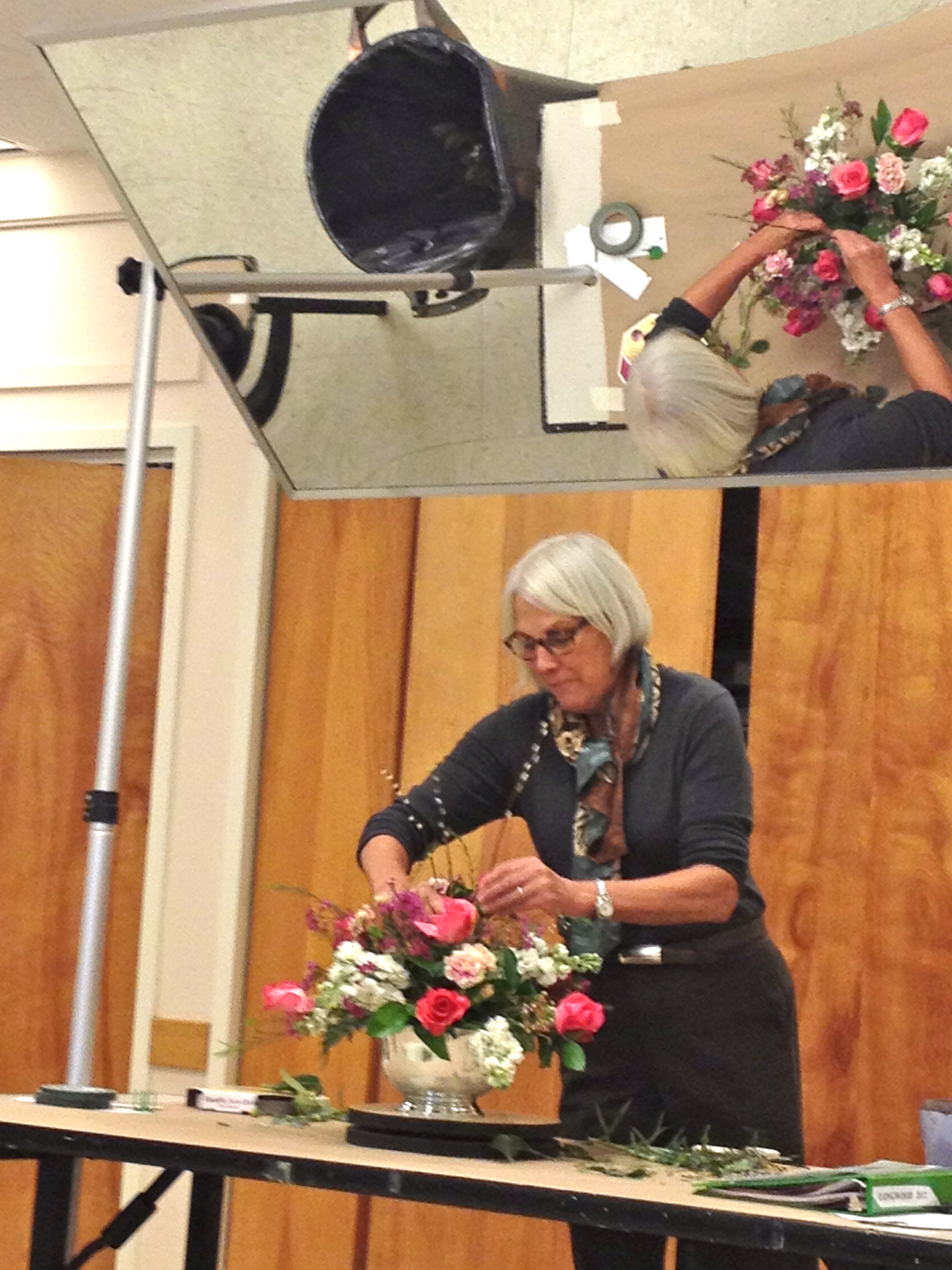
For this class, we were to make a round arrangement, or a “Roundy Moundy” using line, form, and filler flowers in a Revere bowl.  Ours were not real silver, mind you.  Roundy Moundies are “the most useful” shape for arranging, says Jane.  Also, the “Golden Rule” of floral design is that your flowers are 2/3 of the design, and your container is 1/3.  We started off with Oasis, again (but this time, Jane admitted that you should use floral foam “sparingly,” as it’s not recyclable) making sure that the floral foam actually rose ABOVE the lip of the container a bit.  This gives you the ability to point stems at a downward angle to hang over the container, achieving a fullness and roundness.  Next, we created our base of greens.  Then we added our line flower or Stock in this case.  On top of the Ruscus and Fern, here’s what each of us had to work with:  6 Stock, 10 roses, 4 carnation, 3 Waxflower or Baby’s Breath, 3 Pussywillow for accent if wanted.

After form flowers (roses+carnations) and filler (waxflower,) Jane adds pussy willows for accent

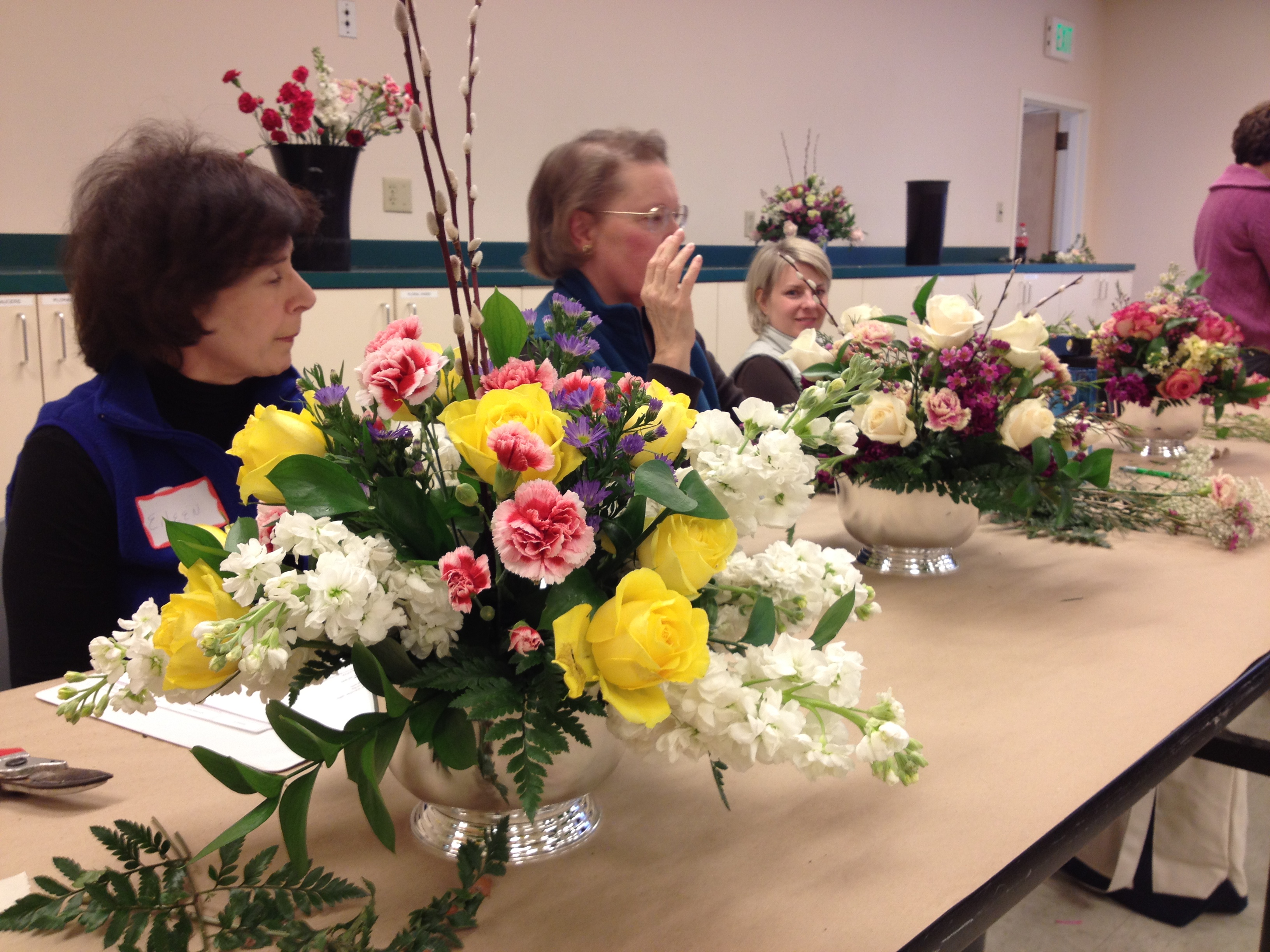
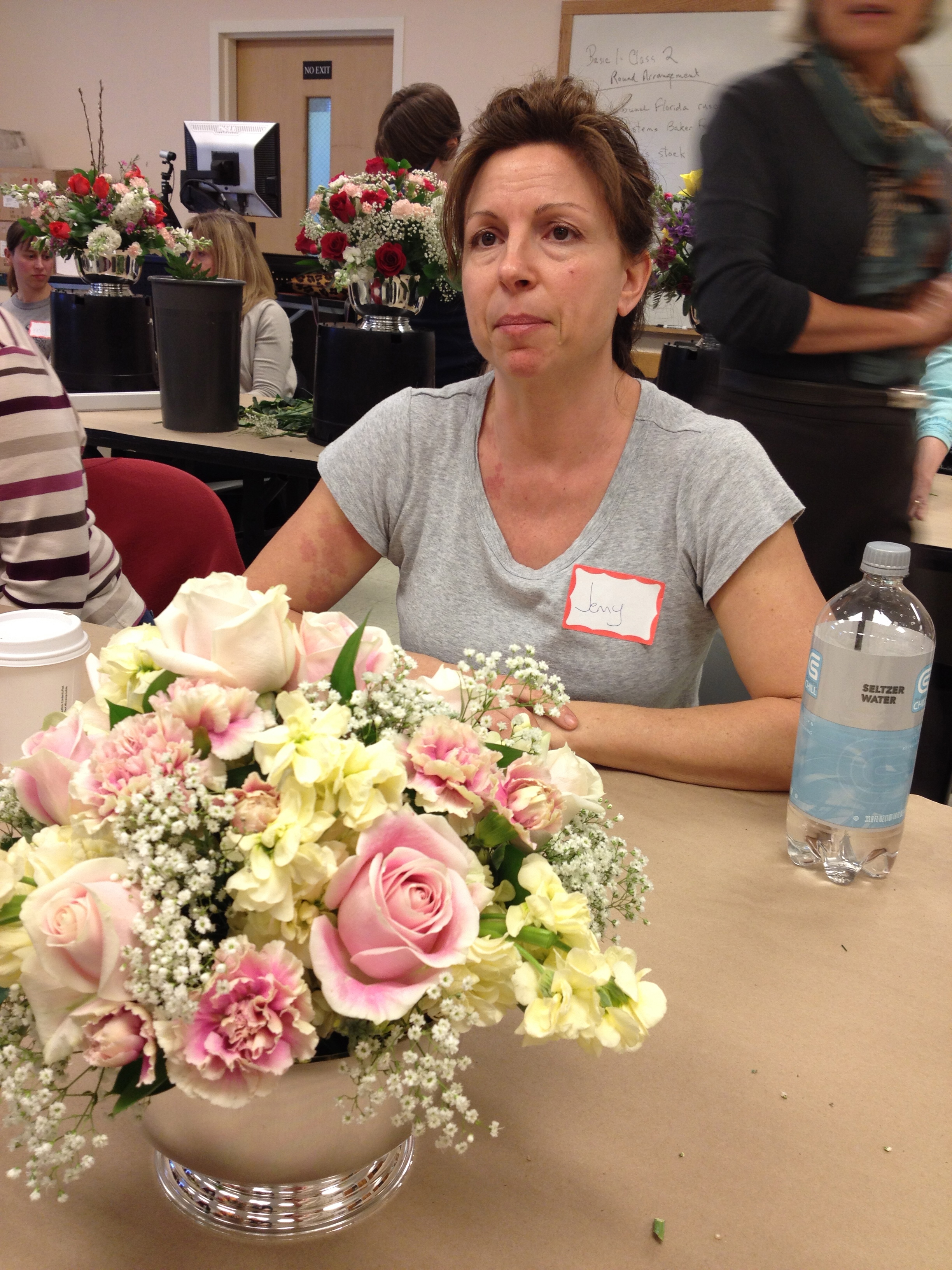
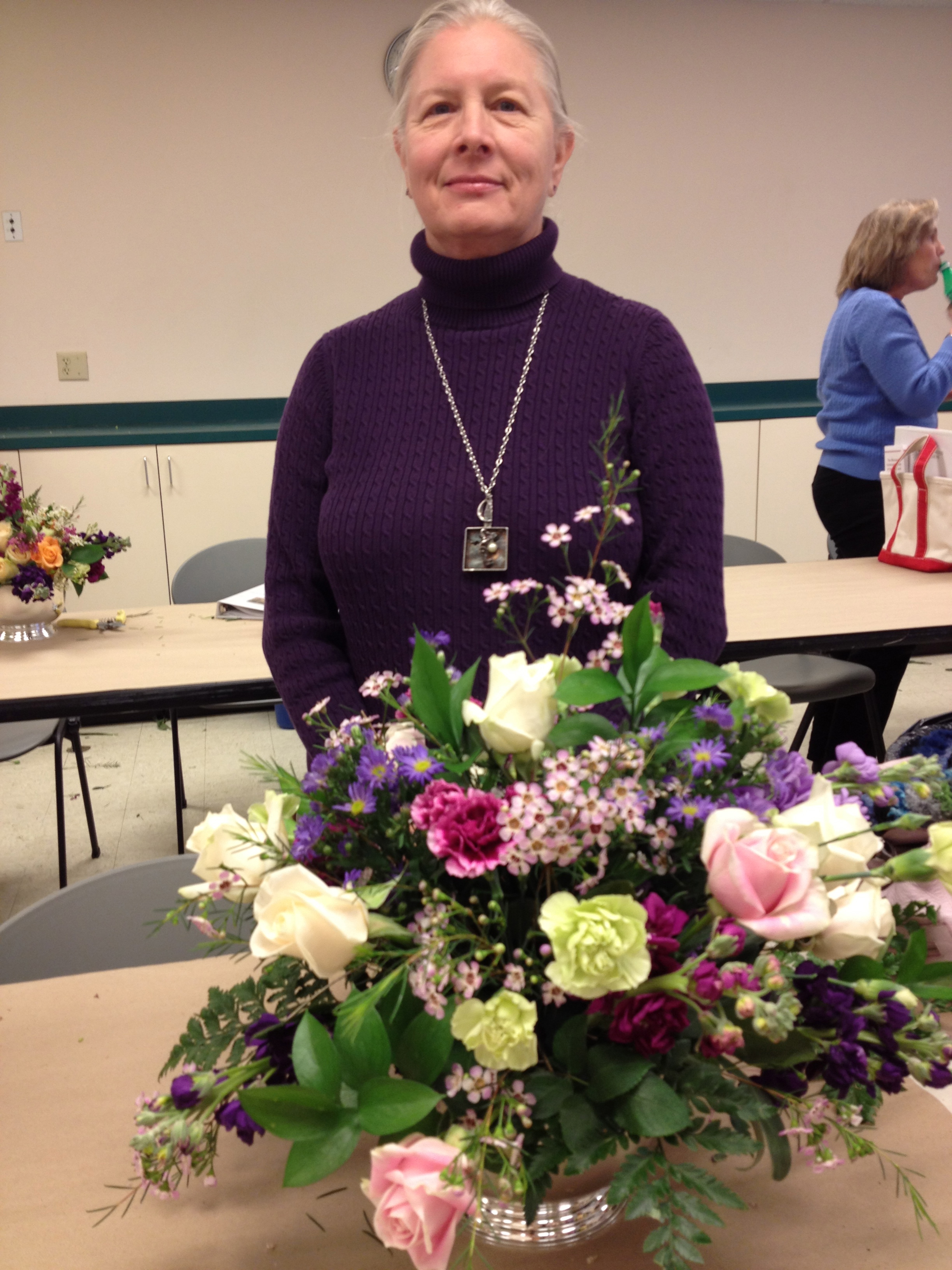
And…GO! I went into a MAJOR trance while arranging this time – sorry Melissa if I seemed out of it while you were chatting me up.  I was in the zone.  Once again, everyone had such unique designs given that we all had the same material, and I’m just mesmerized by this expression.  Here are some of the lovely results:

line of roundy moundies

the "cupcake"

purple pride

afeefa's rocks again

melissa's! nice!

airy one by pat


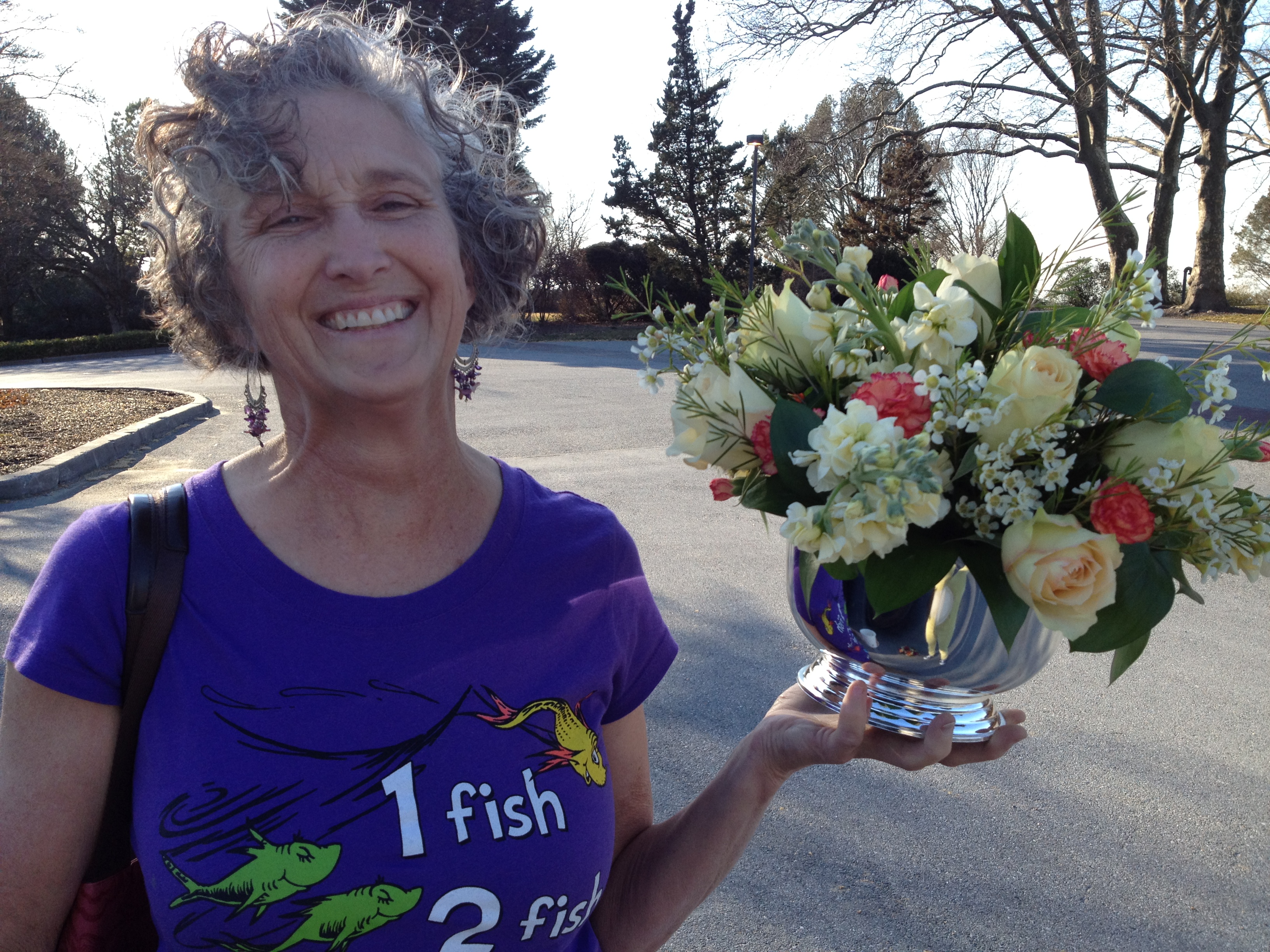
my roundy moundy - i bunched flowers instead of spacing them perfectly

Oh, wait there’s one more.  Our classes are enlivened by Betty’s presence.  She is the class “loudmouth,” (her word,) and always has a funny comment to make.  During this class she had us all laughing by creating new “technical terms” like ‘big ol honking flower’ to refer to the Stock we were using.  She’s a hoot – and talking to her in the parking lot I found out she’s a landscape gardener who lives in DE.  I got an invite back to her place to talk Cutting Gardens!  Sometime soon, I’ll have to do that.

these arrangements look way different in daylight i noticed - VIVA BETTY !!

a garden of my own(-ish)

Okay, I’ve done a lot of digging in the dirt, at other people’s houses. For money. I’ve taken classes in ornamental horticulture, worked at NYBG, and been a TV garden editor for Martha Stewart. But I’ve never envisioned my own garden and created one. What would it look like?

Photograph: © Country Life Picture Library, from Gertrude Jekyll and the Country House Garden by Judith B. Tankard, Rizzoli New York, 2011

No, not like that.

I guess I tell myself that my excuse for never making a garden of my own is that I got caught up in television production, a career that has served me well over the years but also required an unhealthy amount of ignoring my own life. But if I’m being totally honest (and I think I should because this is my blog,) gardening and I parted ways after a traumatic event that occurred at Martha’s house in Maine. Yes, I’m going to blame it all on Martha.

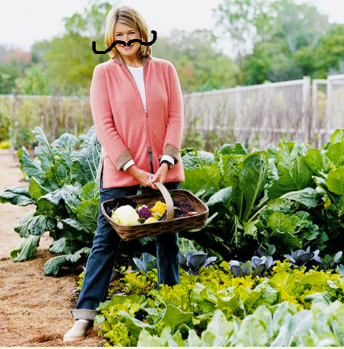
garden mothra: i drew this mustache on using GIMP

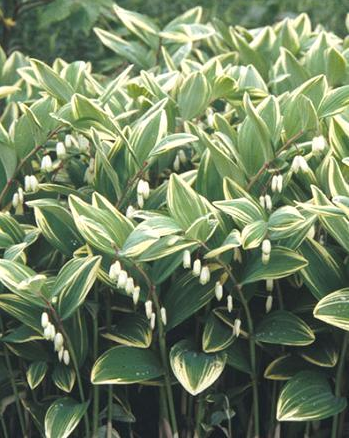
We had Dan Hinkley as a guest, you know the fantastic plantsman of Heronswood fame, and I was the producer and garden prep person for a segment we were to do on shade treasures. Since Dan travels the world collecting rare specimens and cultivating them for trade, you can imagine the amazing plants he had brought for the Skylands property! (And he’s also the sweetest guy you’ll ever meet.) This would be a chance to educate folks on some of the possibilities for shady areas, so we had a good variety of stuff out there. As I’m prepping Martha for the segment, she looks at all the “shade treasures” and says, “what’s all this? I can’t plant all this here! I only want one kind of plant here, Solomon’s seal.” I tried to argue with her (bad idea) about the fact that we had already discussed every inch of the material and she had already agreed to all of the plants going into the ground, but she was steadfast. It was her garden, of course, so we turned it into a Plant of the Week segment on the very beautiful Solomon’s seal that Dan had brought. Yes, we flew him across the country to talk about ONE PLANT. I think I was more upset about that than anything else.

Polygonatum odoratum

But…in this process of arguing with her, and trying to convince her that the plant variety was important for education, she hooked onto the idea that I was more of a television producer than a gardener. She looked at me with those see-everything brown eyes and said, “You’re not a real gardener.” This was pretty much the only time Martha ever made me cry in the entire decade I worked for her. I almost quit right there. And I think I really took that statement to heart, and followed the TV production path instead of the gardening one. It was quite stupid of me, to listen to someone who has minions that make her gardens. And stupid of me to let this one sentence sink into my bones. It doesn’t mean I can’t grow a few fucking flowers. (Addendum: please don’t get the wrong idea about Martha. I have so many good things to say about her, and her beautiful gardens, and all the opportunities she gave me, and the Emmys we won, and everything I learned…but I just had to tell that one little Fleur de Mal.)

ANYWAY…now that I’m ‘in-between’ TV gigs, or maybe done with TV altogether, this gardening/floristry/plant path is once again beckoning to me. I’ve begun dreaming about my garden…made possible by my amazing parents, who said they’d let me have a little patch of earth on their property to play with. Oh golly! Really? I hope they’re serious! Because I already ordered some seeds from Seedsavers Exchange! That’s the first place I thought of, because they offer heirloom varieties of seeds that gardeners from around the world save and swap each year.

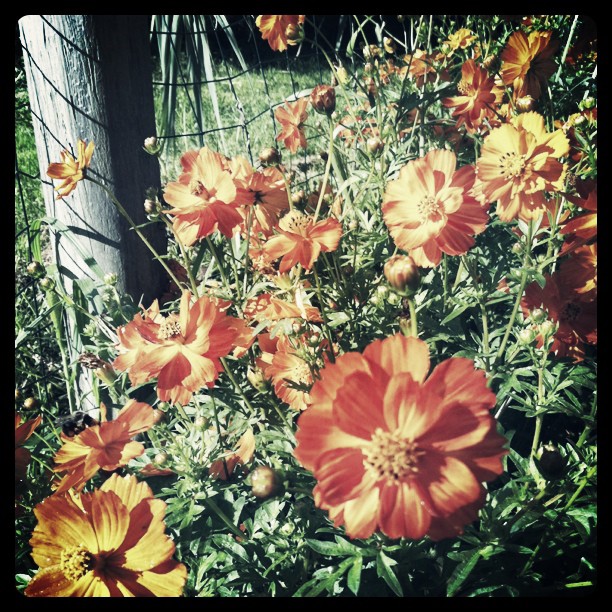
cosmos

I’m thinking cutting garden with some herbs and veggies thrown in. In other words, it will be totally utilitarian with a bunch of stuff I love. Keep it simple, try to be successful at something small. Neat and organized. I haven’t measured or really taken this to the next level by cordoning off an area yet, because I don’t want to scare my parents off of the idea. I must admit I went a little crazy on the Seedsavers site today, and I know I will have to scale back (bearing in mind I also want to order plants too.) I need to do this in the proper order, starting with doing a LOT of research and reading about what plants perform well in zone 7a (yes, that’s right, we are 7a now with the new USDA plant hardiness map!) and are also deer resistant. I hope to create a spreadsheet with all the salient facts to help keep me organized. Last night, I fell asleep with a cut flower book in my lap and tonight I plan on doing the same. This is my Seedsavers order:

The cukes are for my husband, who has been talking about pickling for the last 1700 years. This is the year to do that, too, I hope. Enjoy the new moon energy!

the Valentine’s day haze of 2012

I close my eyes and see…flowers.  Soft pink tulips tinged with veins of green, the cheery pom-poms of chartreuse snowball viburnums, light lavender sweet peas so papery thin, luscious flesh-colored stock that exudes a sweet-spicy scent, a stab of bright blue-purple delphinium, and roses upon roses…roses the color of a wild sunset or a rosy tangerine, roses the color of peaches edged with soft green, lipstick red roses, and Deja Vu roses standing at attention on their 3-ft long stems, a clear concise yellow that says, Hello You.

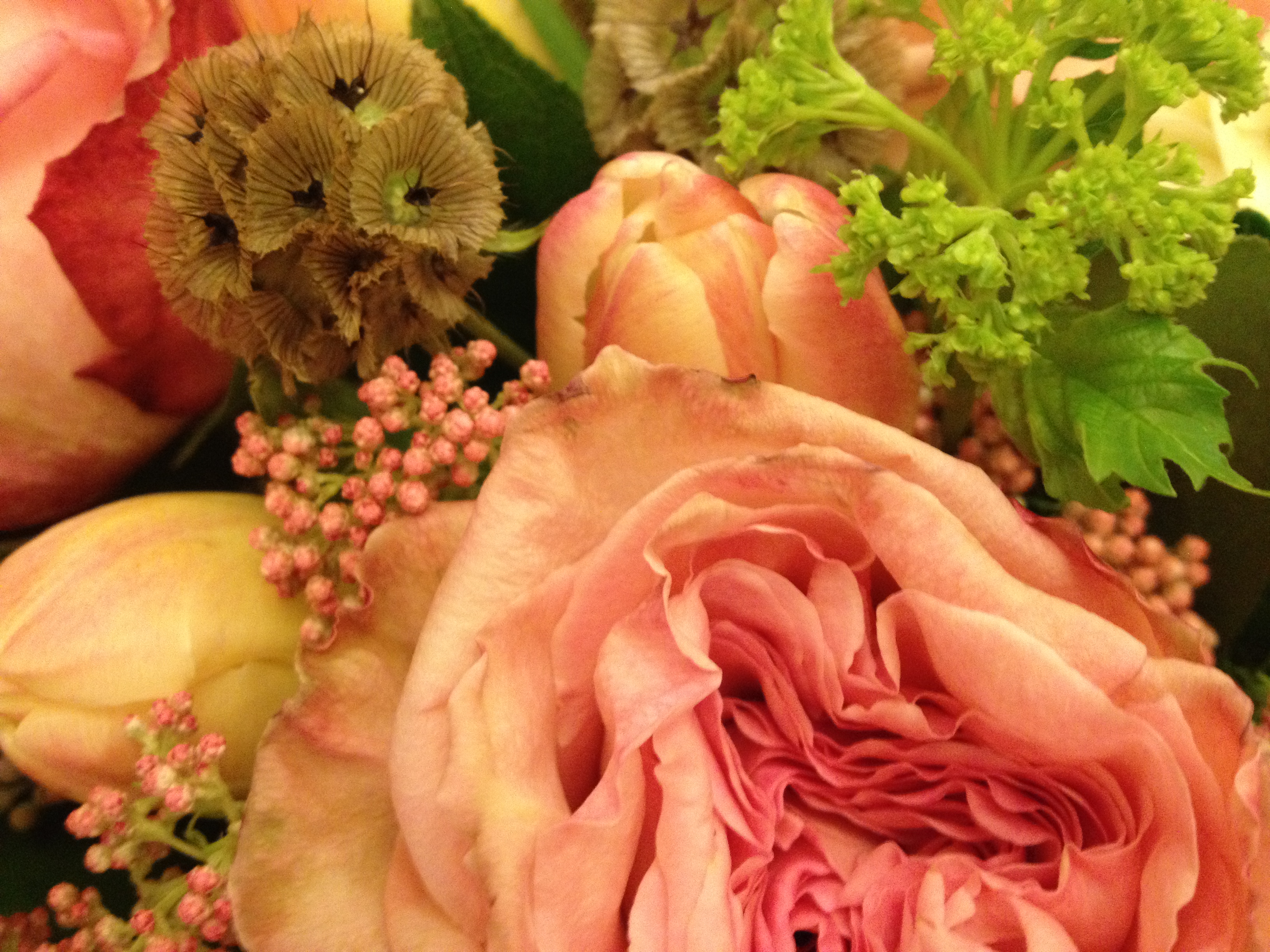
check out the scabiosa seedpod amidst the garden roses, tulips, viburnum, and rice flower

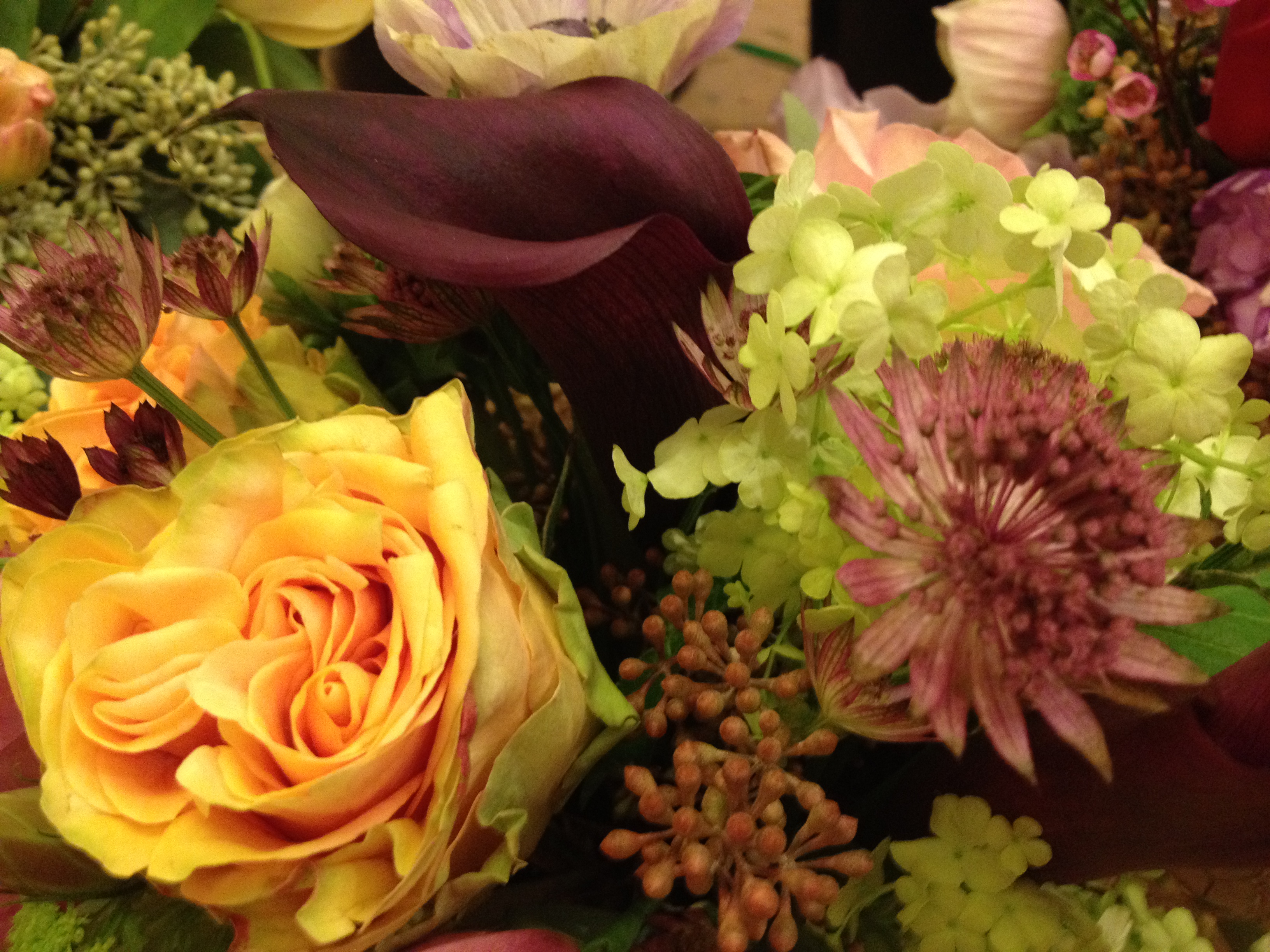
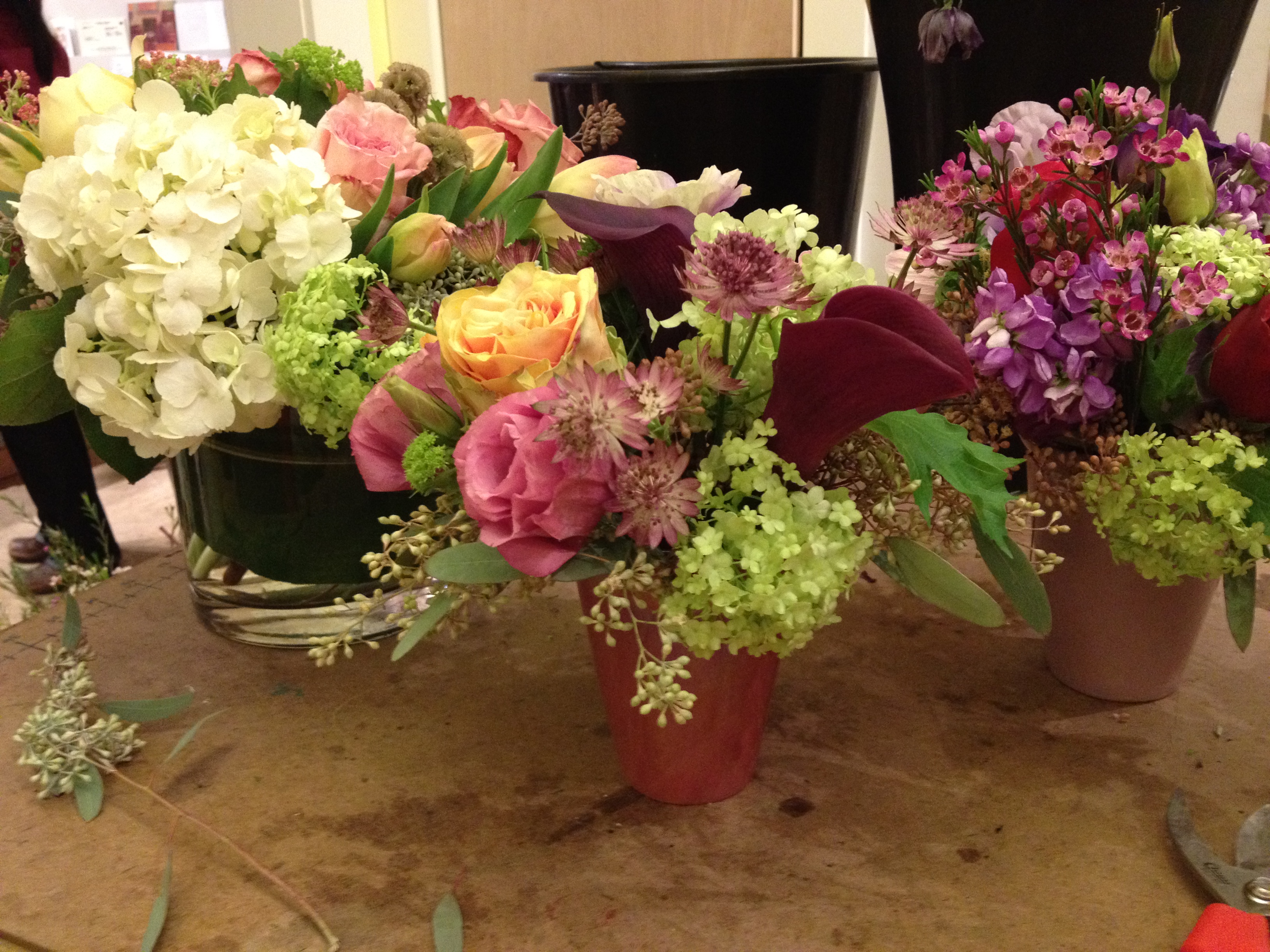
peachy green roses, astrantia, calla lily, viburnum, seeded eucalyptus mmm

Yesterday turned out to be one of my favorite days of all time, and I’m not much into Valentine’s Day.  Well that was BF…Before Flowers.  I went into the shop on Monday to help prep the roses (oh yeah, like 700 of them!) and to get some bouquet-making lessons from my beautiful boss lady Peicha.  I left with a price list to study and a sour ball of nervousness percolating in my stomach.  Would I be able to arrange quickly and confidently and add up prices in my head at the same time?  Would I choose the right “color stories?”  Would the stress of a lot of retail interaction be too much for me?  (The needy masses hungry for brilliant arrangements queuing up to watch me fail.)

wake up and smell the roses!

Valentine’s Day 2012 arrived with the Tarot Card of Death in an email. I don’t know why I subject myself to these emails that are supposed to tell me how my day will go.  Like somehow getting the Knave of Wands randomly generated  by a computer means I’ll have an adventurous day.  But the Death Card…uh oh…how is that interpreted at 7am? Maybe I’ll impale myself with a rose and die…or get in a car accident on that Big Road called City Ave…or simply die of shame.  I dressed in what my brother calls my ‘riding boots’ and a bright red blazer (Anthro of course) and hoped that this geranium red would give me some kind of confidence.

smooches from emily!


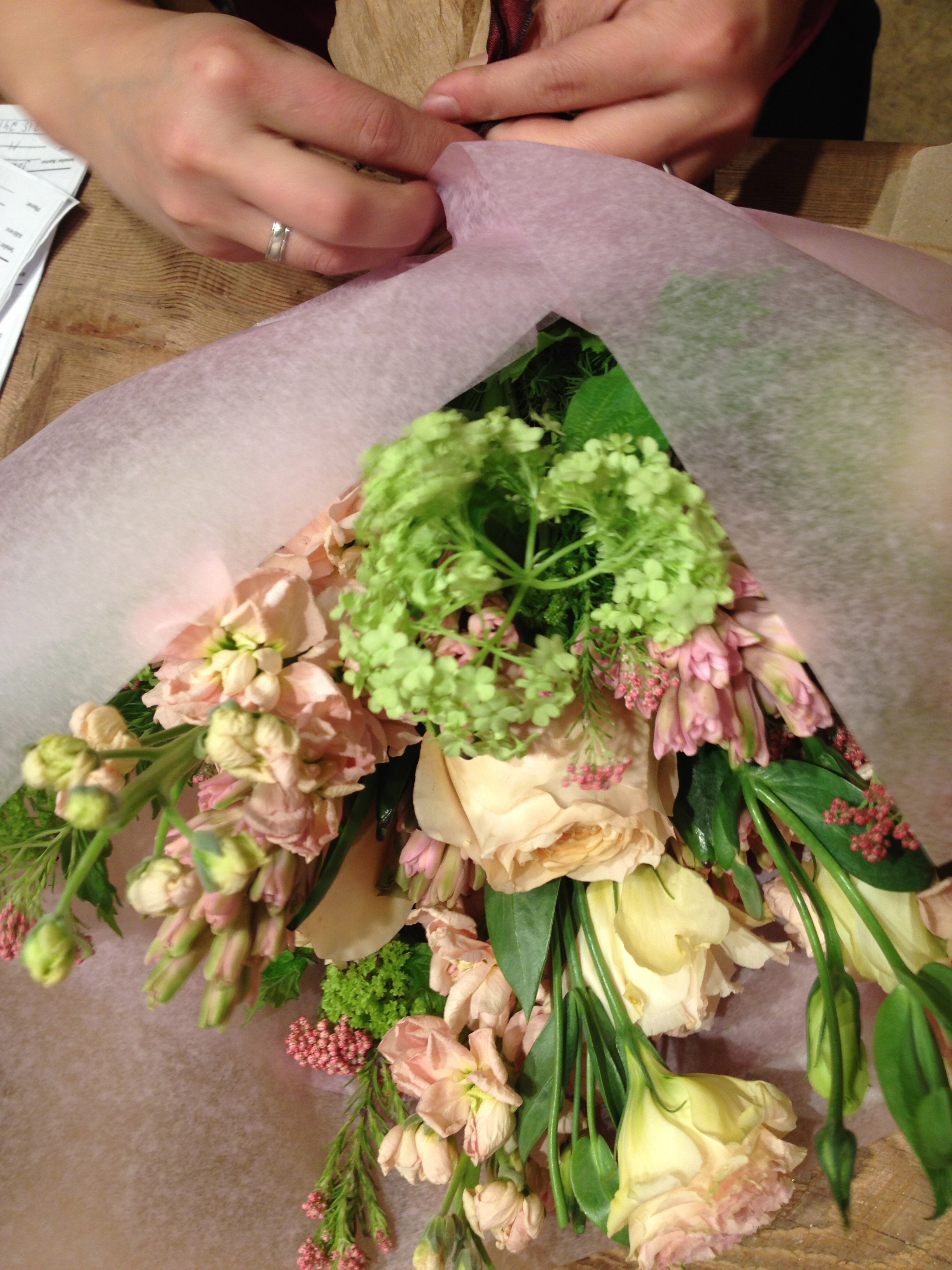
When I arrived the ladies were in full swing, in fact Peicha had been there since the crack of the ass of dawn, making the pre-ordered bouquets and arrangements (in vases.) She was feeling ‘ahead of the game.’  Dear Emily, an ever-bubbling font of positivity, set our mood to Happy.  Go Team Falls Flowers! Give me an R…O…S…E!  We set into motion together, taking orders from customers, creating bouquets, answering the phone, tying ribbons around the pink tissue that gets wrapped around all the bouquets, and saying “Here you go.  These are your flowers, your Valentine will be so pleased.”

flesh pink stock, rice flower, beigey garden rose, viburnum, lisianthus

Earlier in the day, I took a phone order from a gent who was on business out West.  He and his family live right down the street from Falls Flowers.  He was scared he wasn’t going to get his order in on time, and wanted 4 arrangements (in vases): 2 for his little girls, one for his wife, and one for his mom.  AW.  Peicha let me choose all the flowers for these, and I had a ball doing it.

3 vday arrangements for lucky ladies down the block


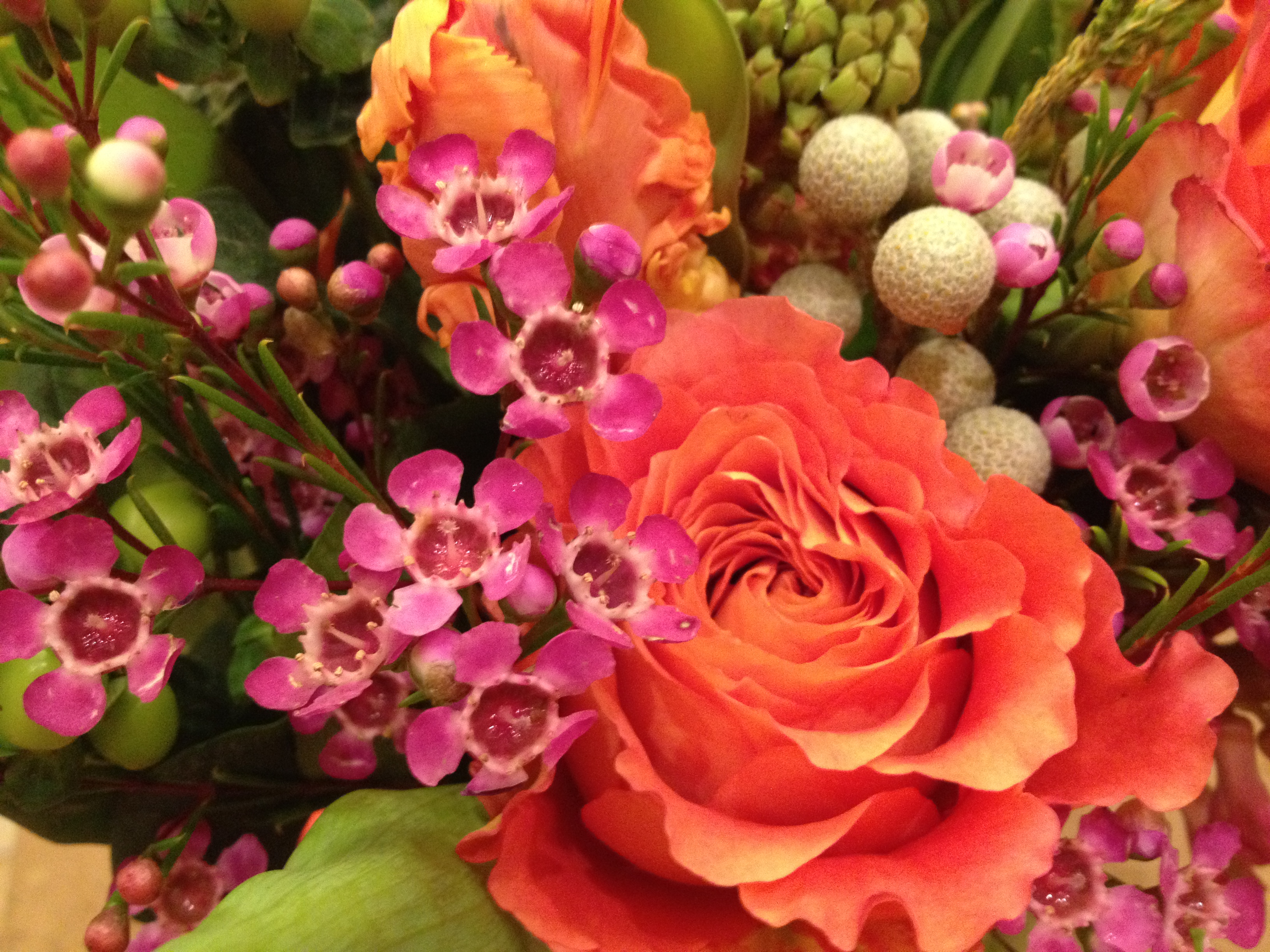
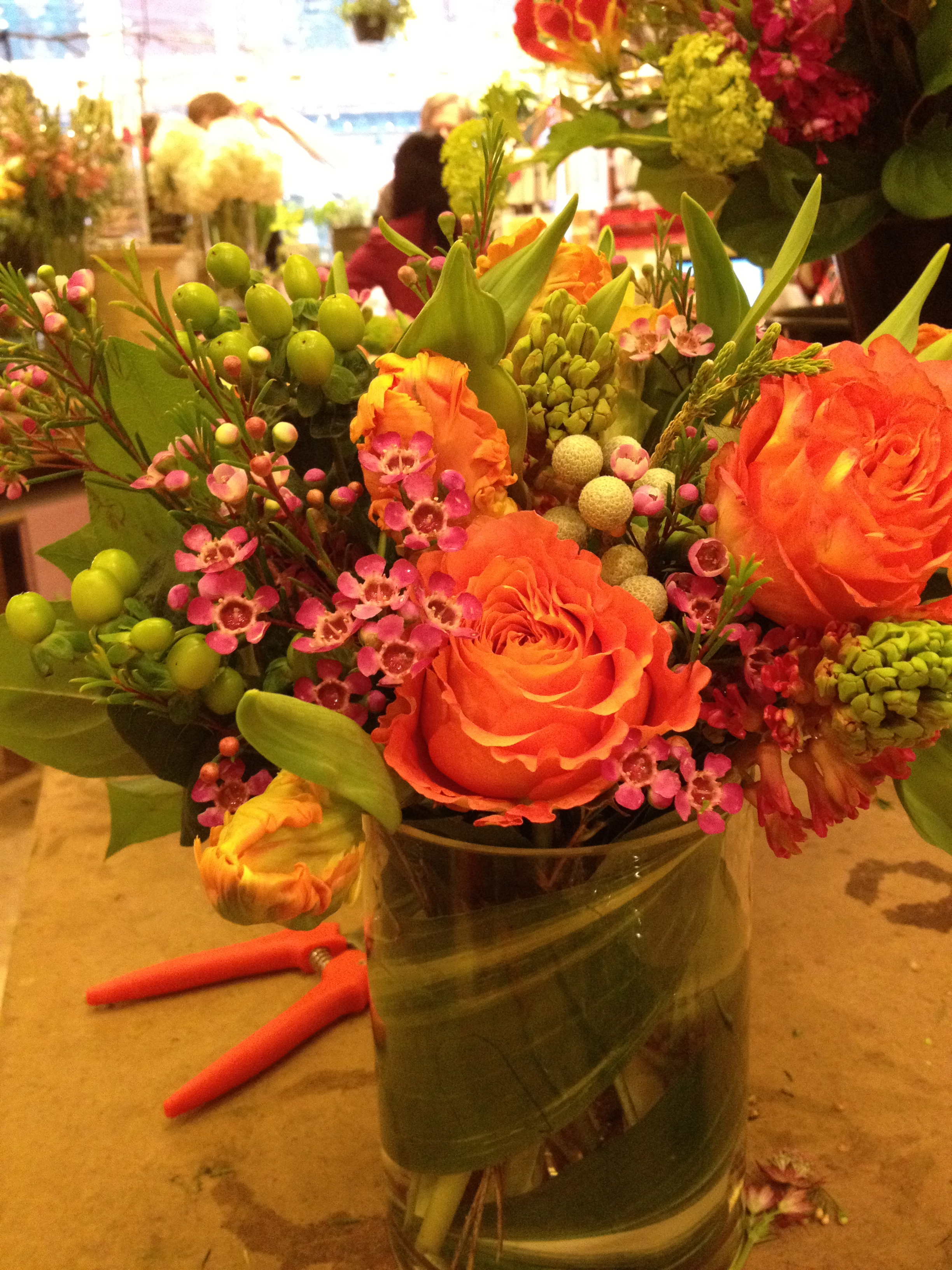
grandma's arrangement: tangerine roses, hot pink hyacinth, brunia, waxflower, hypericum berry, frilly orange tulips

And at the end of the day, after all the madness and yes, making a few mistakes here and there and having to use a calculator as I chose blooms, I got to deliver the 4 completed arrangements with Peicha’s husband Mark, who god love him was out all day delivering our product all over tarnation.  The door opens, and a little girl holding a Hello Kitty doll answers.  There we are, with flowers popping out of our heads, what must we look like to her? Her face lights up.  Delivery for Lila! I say.  Mom/Wife comes to the door to see what the ruckus is.  HER face lights up.  We enter, placing the arrangements around the room, and Grandmom/Mom sees the goods and HER face lights up.   I say that Dave/Daddy wanted all of his Valentines to have a very special day and that’s why we made each of you your own special arrangement.  Shock and awe.  This guy just racked up points that will last him all year.  As we’re leaving, little Lila says, “Hello Kitty says Goodbye!” And that’s the end of Valentine’s Day.

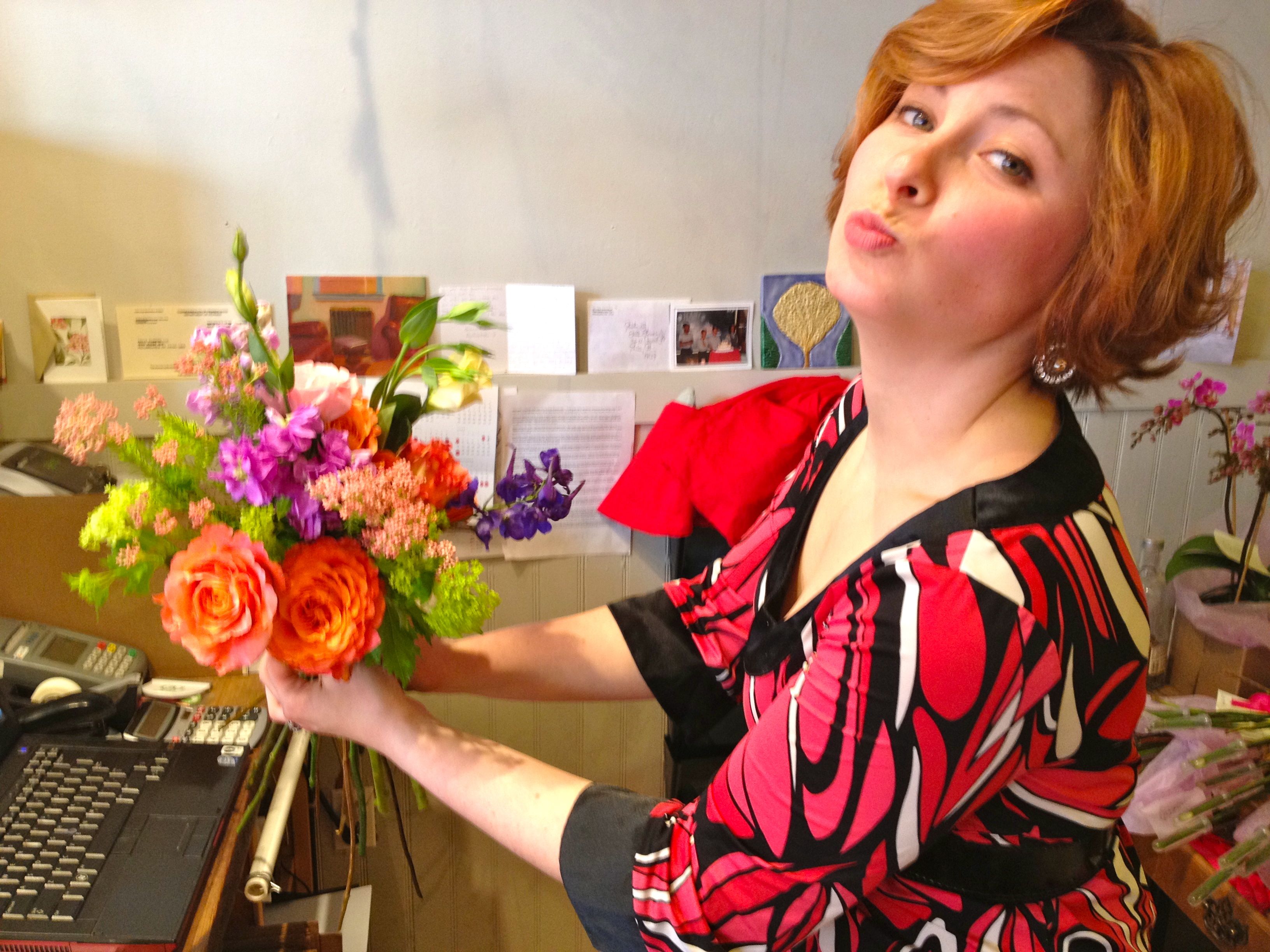
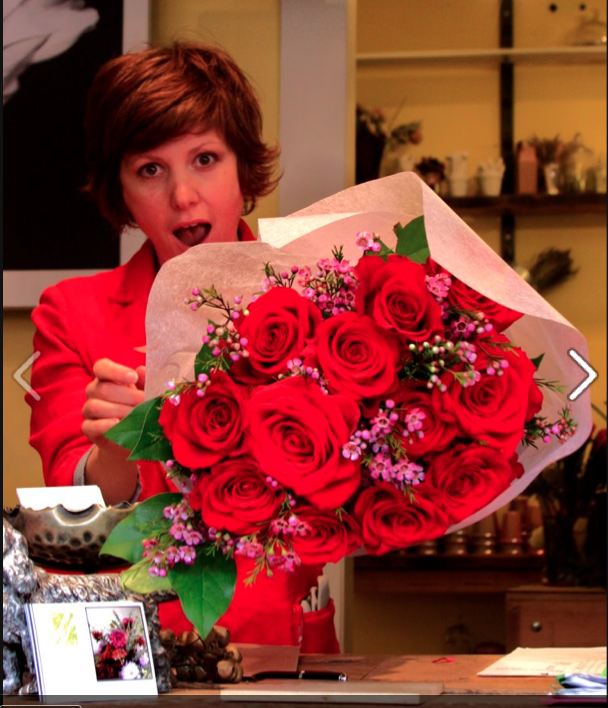
me with RED ROSES mixed with waxflower bouquet...POW! photo courtesy FF and emily

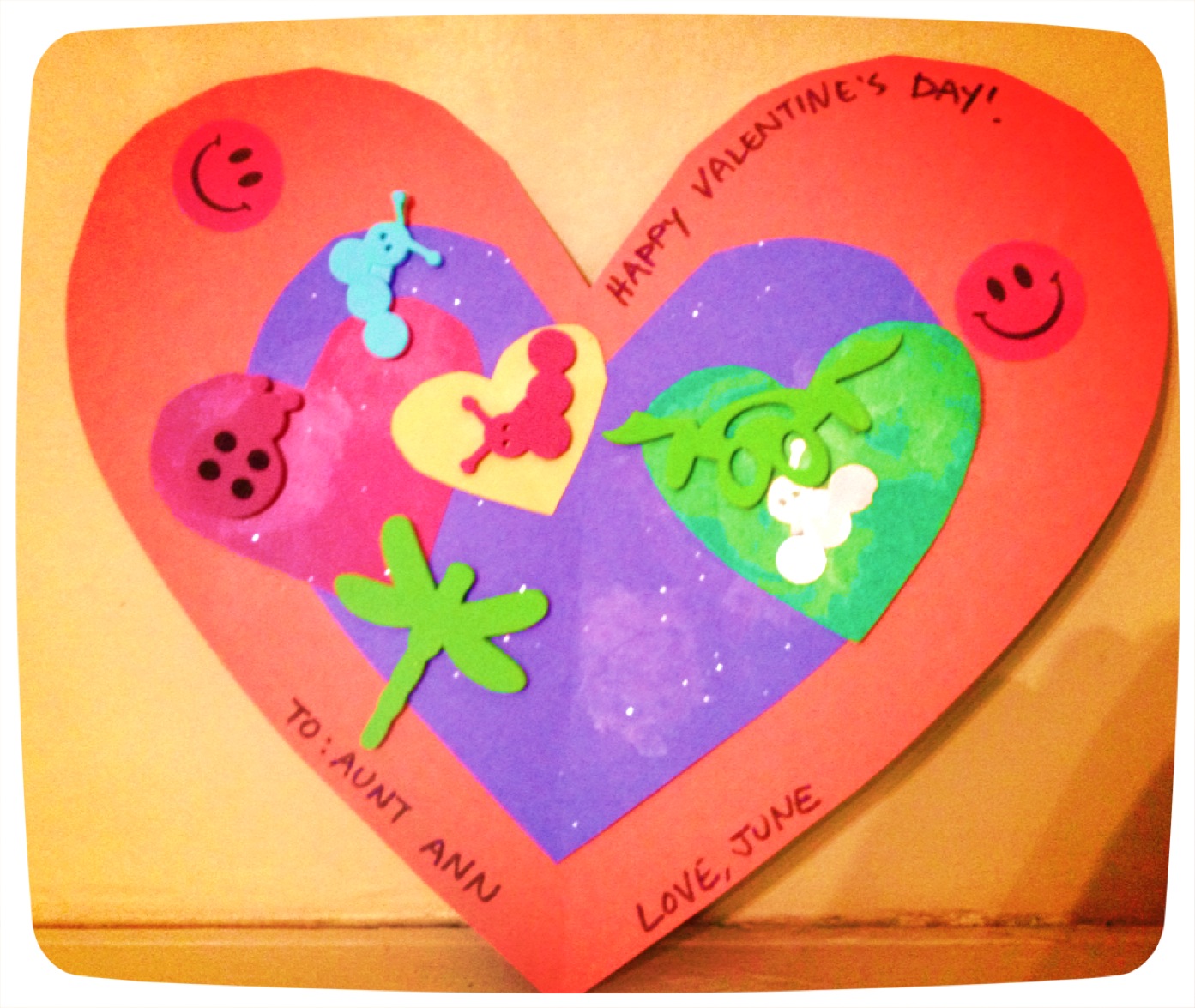
Or is it?  After spending the day in nonstop motion, working in tandem with 2 very talented and delightful creatures, and using my head heart and hands, I feel fulfilled on so many levels.  But a little sad, because where is MY Valentine?  Who loves ME enough to give me flowers? When I get home (well my parent’s house because that’s where I’m staying right now) my 2-yr old niece is there for dinner.  She is all smiles, sitting in her big girl chair and gobbling up her dinner.  We jokingly eat each leaf of the salad separately pretending to be Peter Rabbit.  Fun.  And after dinner, a very special surprise for Auntie Ann.  My very own Valentine with dragonflies, frogs, caterpillars and lady bugs made especially for me by niece.  She gives me big hugs and giggly Eskimo kisses to top it all off.  L…O…V…E!

the meaning of floral design?

roses in for VDAY at falls flowers shop

“In floral design, there is no better teacher than the flower itself.  This is the essential maxim.  In a flower’s perfection, we instinctively recognize the infinite creativity and wisdom of nature.  By looking closely at each flower, we take the first step in discovering how best to display its beauty, arrange its placement, and find possible companions in a floral design.” – Alisa A. de Jong-Stout, in A Master Guide to The Art of Floral Design, a book I checked out of the Swarthmore library.  The book our Longwood teacher recommends is $180…so, I think I’ll wait on that one.

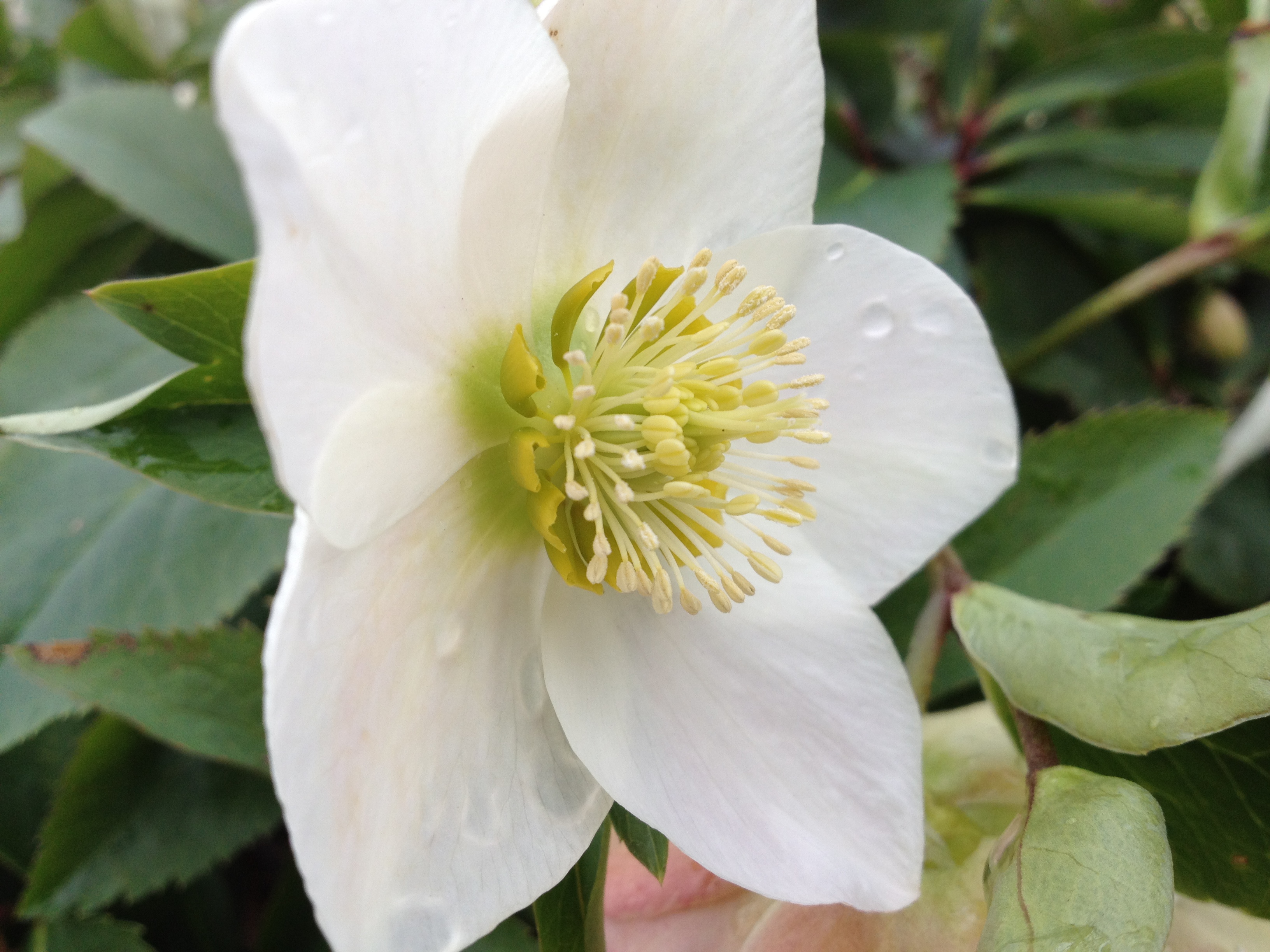
helleborus 'snow bunting' at scott arboretum mmmmmmm

I think in picking up this book, I was hoping to get some answers on what floral design really means.  I want it to be meaningful.  I think I struggle with its meaning somewhat because I know plants better as they are growing, alive, with roots in the ground.  For me, plants/flowers take on an almost spiritual cast while in their natural state – they are to be observed, identified and photographed, in a worshipful way.  Before I read this book and started this learning program, I had this somewhat disdainful view of the floral industry – that floral design is just nature’s wannabe imitation, that making bouquets is sort of cheating when the real work is in growing things.  But now I think I feel differently – we can learn from the flower whether it’s in the ground or in the vase – marvel at its patterns and form and color.  You can respect the biological side of things and at the same time appreciate the art of the flower while its in a jar.   And I’m loving the artiness of it all!  Because, you know, according to Ms. de Jong-Stout, “cutting a flower outdoors to display indoors was conceivably the first and most basic of all artistic impulses.”

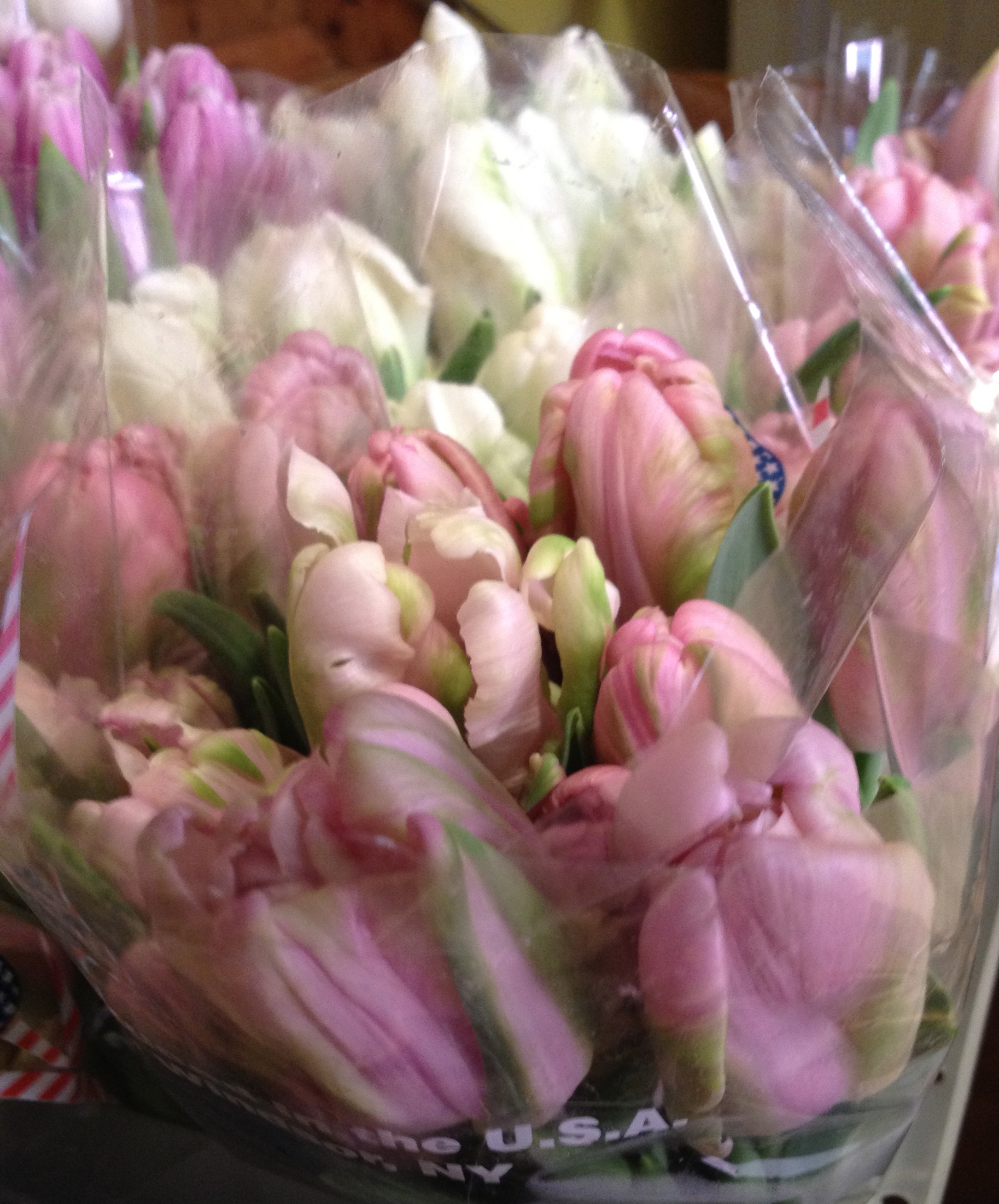
parrot tulips

“Abstraction is the defining quality of floral design.  Even botanical compositions, which emphasize the specific identities of the plant material involved, contain an element of abstraction. Simply taking a bloom out of its original environment dilutes its botanical purity, which is why a floral design can never completely duplicate nature. As abstraction increases, inherent qualities of shape, form, or color, independent of floral identity come forward.  Yet a design can never be purely abstract because its foundation is a living flower.  …Success can only come to those who take the time to read the flower and benefit from its incredible wisdom in design.  Respect for the natural essence and character of our medium assures its identity will be preserved, even in abstract compositions.”

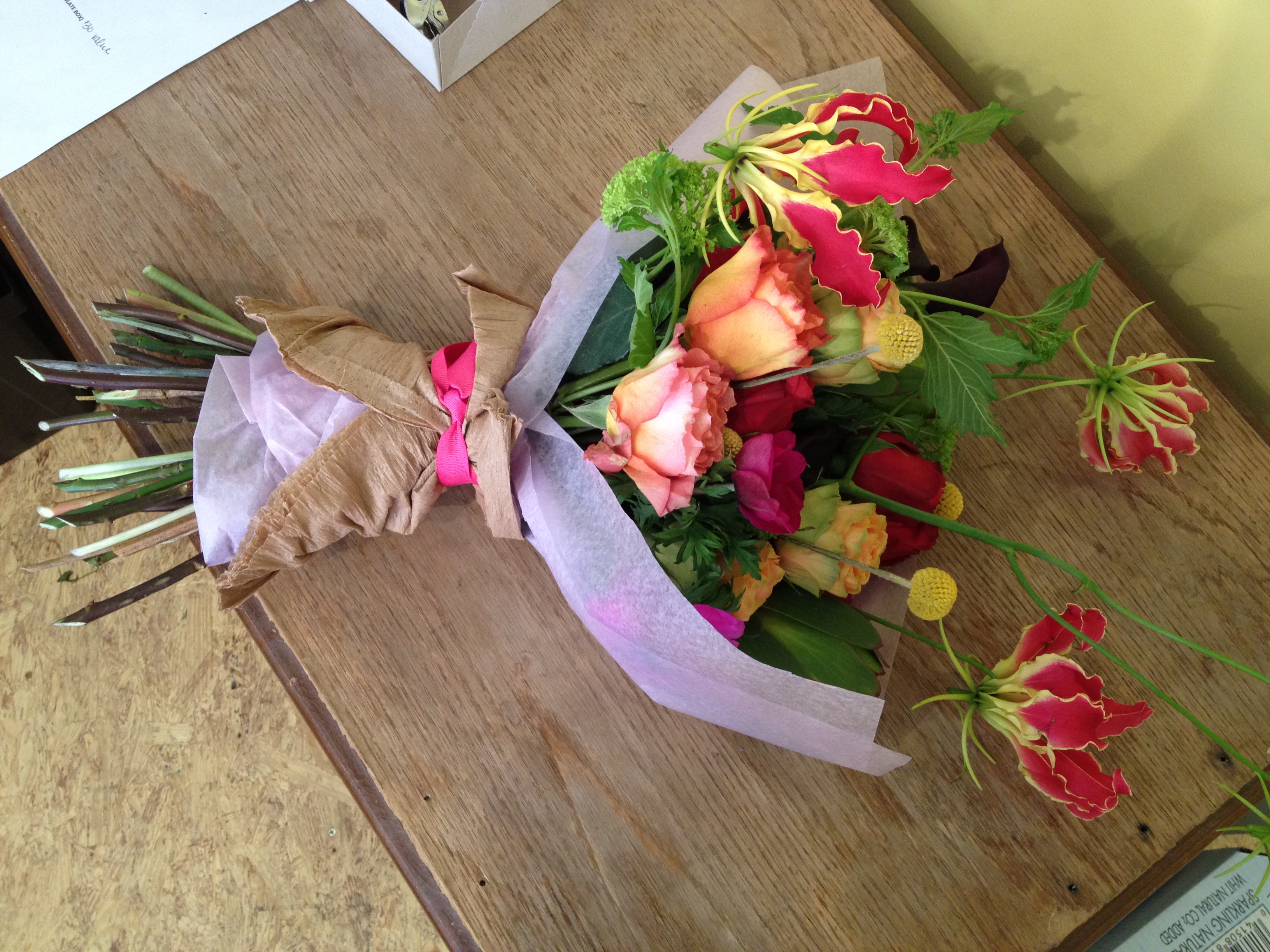
bouquet by Peicha

Happy Valentine’s Day!

day one – basic floral design I at longwood

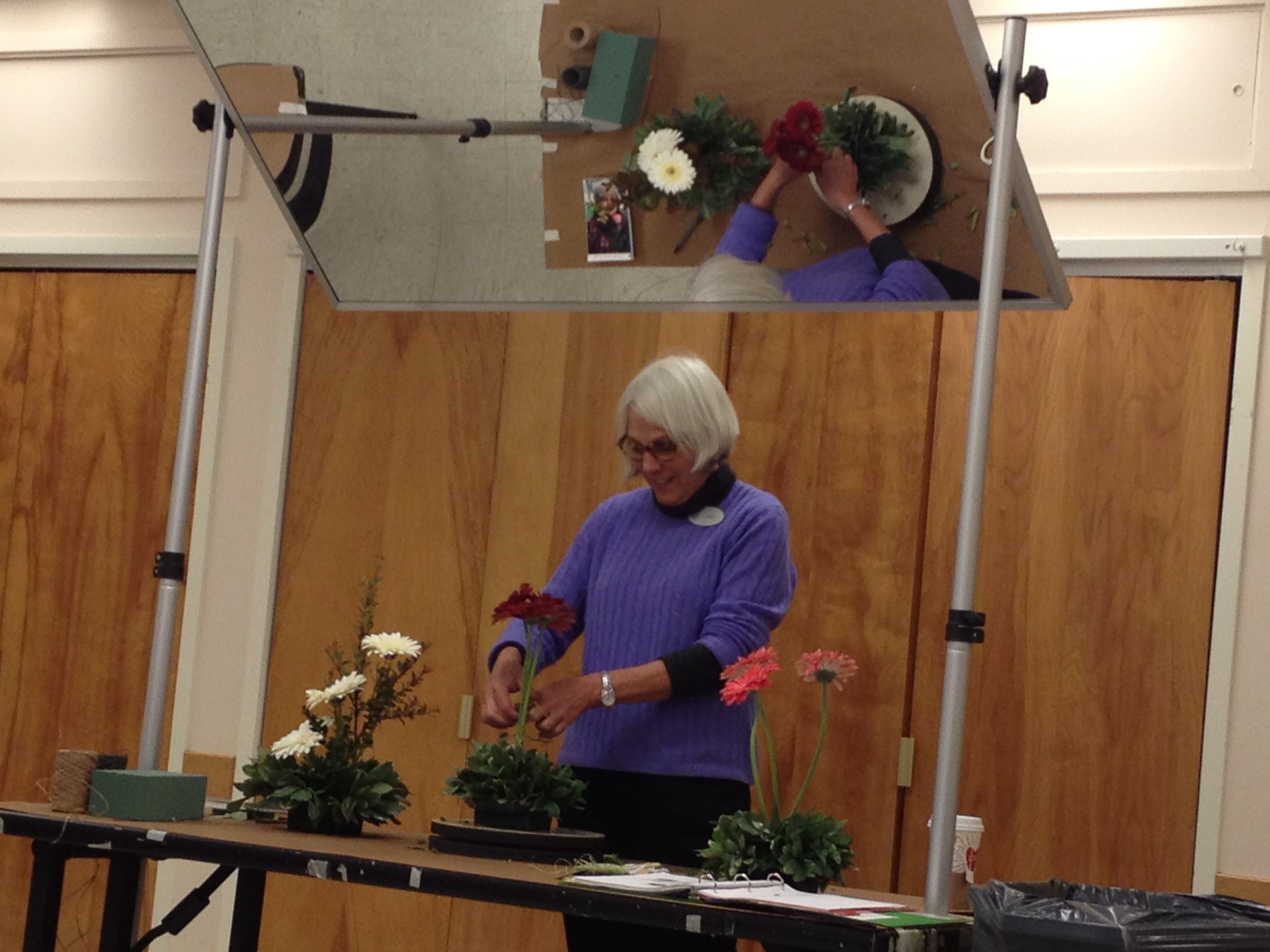
Basic Floral Design I, my Xmas present from the Huzz, began this week.  Combined with what I’ve been learning at the shop, there’s one thing I know:  I have a LOT to learn.   But I feel alive when I’m learning! Even though some of the growing pains are quite painful, like when you do something stupid in front of a bunch of people, the end result can be valuable.  This class is full of supportive, nice women who all want to improve their floral design skills.  I would say they range in age from late 20s to early 60s, but I’m guessing. And so far, I LOVE the teacher Jane Godshalk. She’s witty, expressive, and inclusive – and she’s a freelance floral designer.  In fact some of her stuff will be in the upcoming Philly Flower Show(she said she’s working on a big hula guy or something, whose mannequin she keeps in the basement – quite a surprise when her husband goes down to get wine.  haha.) We went over the tools and materials you need, from pruners to ribbon scissors to wire cutters.  I hope someday I’ll have an organized bag full of sharp clean tools!  Right now I’m just using my old ARS pruners that a gardener whose name I can’t remember gave me out in the Hamptons.   I definitely think gloves are also a good idea, the ones we use at the shop are great and I want to buy my own pair of those to keep with me.  Gotta get the brand tomorrow.

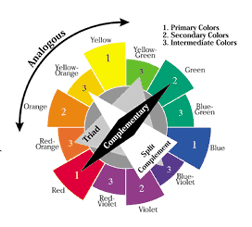
We touched on the Elements and Principles of Design, which was just a teaser really – there’s so much to learn there that a 20 minute power point presentation barely scratches the surface. Elements: Light, Space, Line, Form, Color, Texture, Pattern.  Principles: Harmony, Unity, Balance, Dominance, Rhythm, Proportion, Scale, Contrast.  And COLOR – oh boy this is a big one – we got out the old color wheel and poked around it for a little while.  I’m still massively confused about choosing colors.  It’s safer to go with colors that are analagous or next to each other on the wheel as opposed to complementery colors which are opposite on the wheel.  The hue is the color name – like BLUE for example – add white and you get a tint, add black and you get a shade, add grey and you get a tone.  More on this later.  A LOT more.

jane teaches us the basic basics


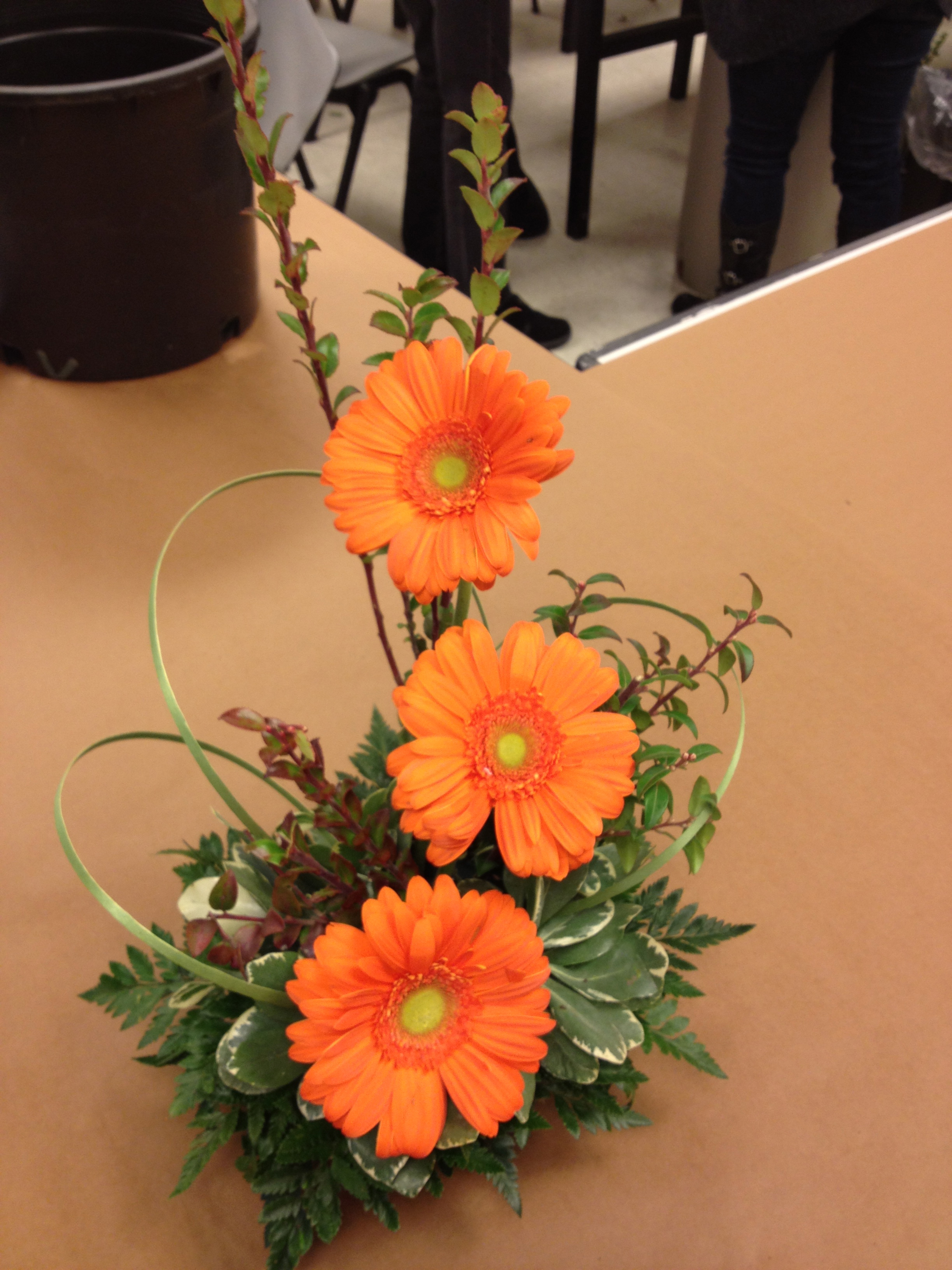
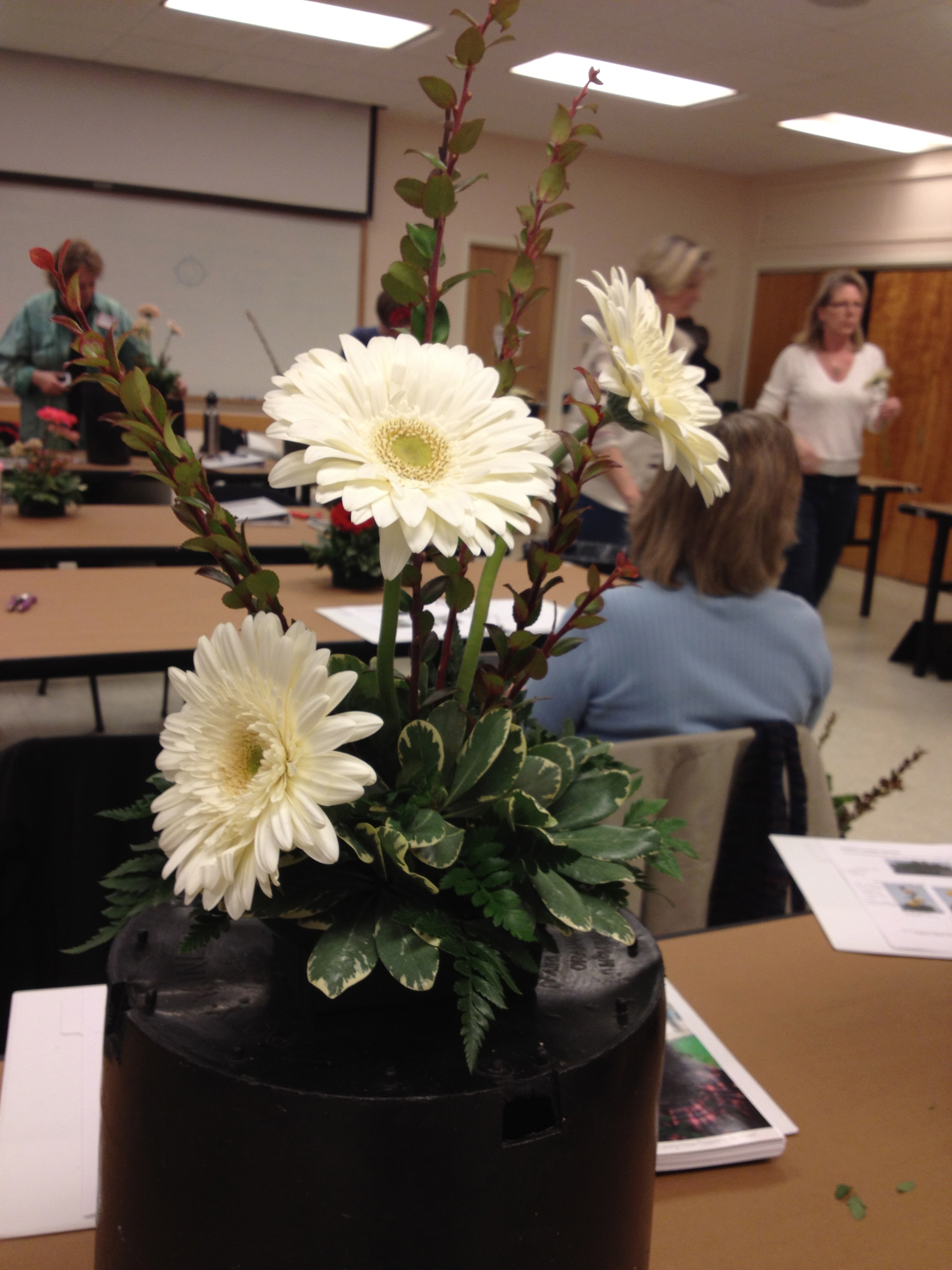
Onto the class exercise, a “Three Flower Design.’  Jane showed us all three designs, starting with a base of Baker fern and Pittosporum and adding 3 Gerbera in varying ways, and then some huckleberry (botanical name? don’t know.)  Then we had to choose which design we wanted to do.  Personally I wasn’t too turned on by any of them, but decided I would go for the looser more natural looking one.  The class split into Group A and Group B – the A’s chose their flowers while the B’s soaked their floral foam.

Oasis Floral Foam:  this stuff is my new favorite thing!  It will hold your flowers/foliage exactly where you put them, and let your materials drink at the same time. It comes in lots of shapes and sizes.  Max Life is the kind our teacher likes the best.  It’s VERY important to soak this stuff correctly, though:  put the holes facing down and don’t try to drown it yourself, just let it float until it sinks on its own and turns from light to dark green.  Cut to fit the container before you soak, and soften the edges of the foam with a knife for maximum surface area to work with.

UPDATE: UH OH OASIS ISN’T SO GOOD FOR US OR THE ENVIRONMENT  – IT’S NOT BIODEGRADABLE AND IT CONTAINS FORMALDEHYDE – LONG TERM EXPOSURE TO THE DUST FROM THE DRY FORM IS NOT GOOD FOR YOU…HMMM…I’LL BE ON THE LOOKOUT FOR BIODEGRADABLE NON TOXIC FLORAL FOAM AND USE OASIS SPARINGLY – info from Sustainable Floristry blog

everyone else is in a floral trance too! jane inspects our work.

We then worked on our designs for…I don’t know, I lost track of the time.   Arranging flowers puts me into the most pleasant trance!!  To me, it was amazing how differently the designs turned out, given that we all had the same materials to work with.  It just shows you how different people really are!

melissa's arrangement matched her personality and the gerbera's feeling

Afeefa - a jewelry designer and crafter - is going to do just fine here!!

flower power

I loved Afeefa’s arrangement – she found these curly wood thingies to put in that added some whimsy.   She was awesome and I loved her necklace – I think she made it.  Everyone got up and said a little about their background and how their ‘design’ went.  I think I said something stupid about having some horticulture background and that I liked how my arrangement was more ‘natural looking’ or garden-y.

my arrangement

In retrospect I think I did this assignment totally incorrectly.  Jane kept saying, “listen to what the flowers are saying to you,” and I know that sentence sounds kooky but I think it’s probably a very good and solid basis for flower arranging in general.  And I didn’t listen: I forced my own desire for things to look natural on Gerbera, which by nature are very formal and synchronous and, well, perfect.  Later, at home, I ripped the Gerbera out and put them in a vase with water.  They just didn’t look right to me popping out of a hedge.  And then I used the hedge parts for something else.  Can’t wait for the next class!!