crocus among us
Image
Reply
Like I said, I’m totally spoiled living essentially on the grounds of Scott Arboretum. Every corner you turn, there’s a plant you know nothing about (true for me, anyway) but thank heavens, they’re labeled. Today I was literally blown away by this shrub that looked as if it were hung with silvery-sage ornaments in the shape of flowery bells.
I can’t even describe how deliciously the slightly metallic flower buds seemed to glow from within. Oh and they’ve got a downy fuzz on them as well. I looked around expecting to see fairies doing a little dance with their rabbit friends. Seriously. Then I came home and did some research, and guess what, it’s a member of the Daphne family so when it blooms expect there to be a heavenly scent! I will check back on this plant to document the buds unfurling and ensuing foliage. Apparently they’ve finally officially named it ‘Snow Cream,’ according to Tony Avent at Plant Delights Nursery in Raleigh, NC where they have sold it “without a cultivar name for the last decade.” Aw, I kind of liked it being called ‘Tony’s Clone.’ Did some further reading at Kew and found that the common name, Paper Bush, refers to the fact that its’ bark is used for making paper, including ornamental Japanese wallpaper, calligraphy paper, and at one time, Japanese bank notes of the highest quality. Neat.
Taking a walk today at the Scott Arboretum, I was counting myself extremely lucky to be at such close distance to these grounds. I’ve taken many (dog) walks here, and there’s always something to see whatever the season. It’s especially exciting to watch the landscape return to life after the dormancy of winter, and noticing the little signs that spring will come (eventually) fills one with a sort of buoyancy. The tinge of pink of this Higan Cherry tree starting to bud caught my eye.

Prunus subhirtella, Higan Cherry
Over the next hill, a flowery fragrance wafts towards me on the foggy misty air. What could it be? It’s so promising, and clean. Ahh…it’s Witch Hazel! I filled my nose with it’s bright scent while marveling at the strappy little punk rock petals, bursting lemon yellow from their red bud shells like party favors.

Chinese Witch Hazel, Hamamelis Mollis 'Early Bright'
It’s formal name is Hamamelis mollis ‘Early Bright,’ a cultivar of Chinese witch hazel which was actually introduced by the Scott Arboretum in 1988. They noticed one particular plant which consistently bloomed about two weeks earlier than it’s neighbors, and over several years selected, named, and released this winter beauty. Here it is blooming in late January but it’s been known to bloom during the first few weeks of January.
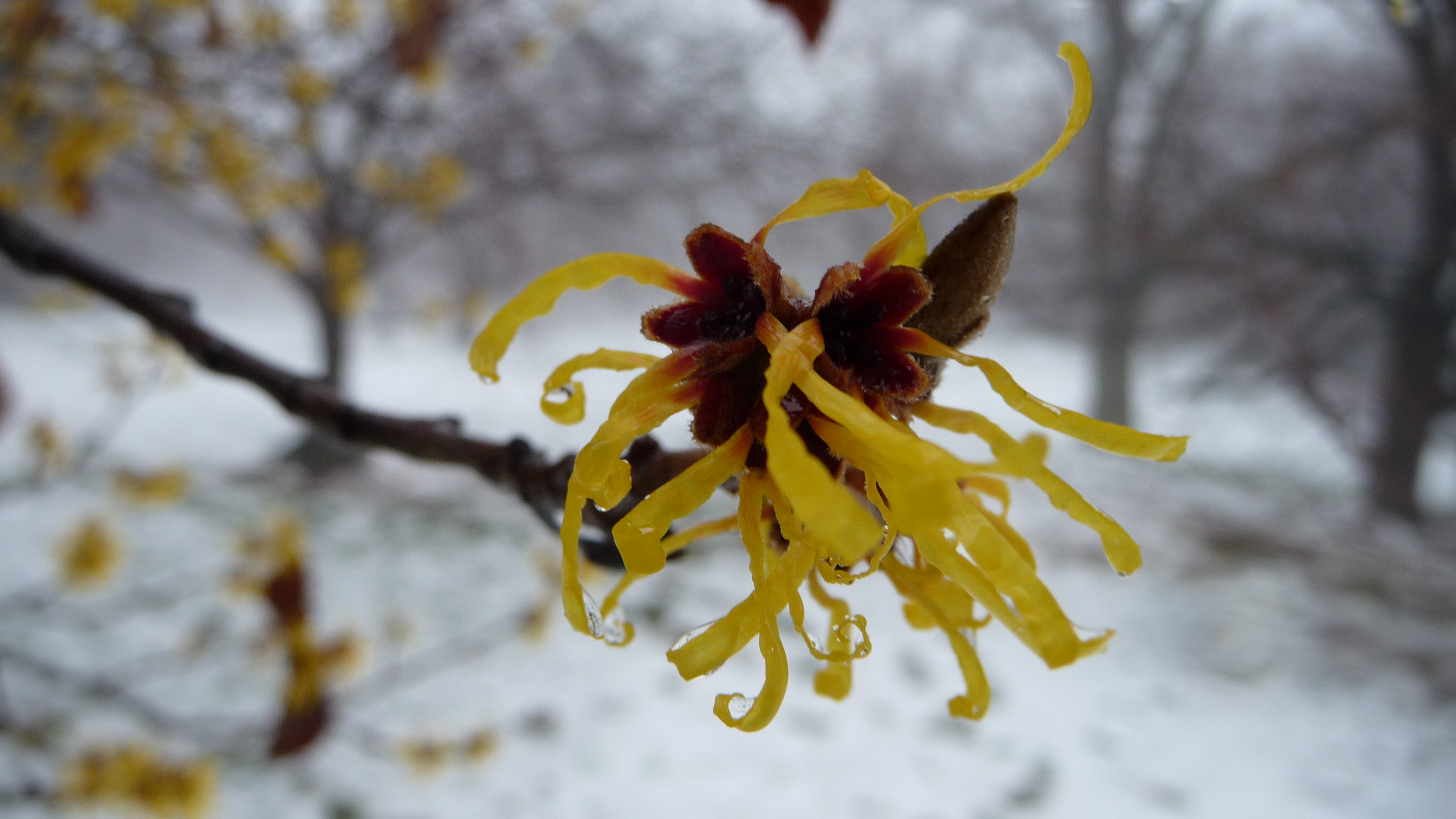
Chinese Witch Hazel, Hamamelis Mollis 'Early Bright'
Among those responsible for this fine introduction is Andrew Bunting, now Scott Arb’s Curator and owner of Fine Garden Creations, a company I worked for in 1996/1997. I consider Andrew and his team responsible for getting me started on my journey into the world of horticulture, a world I’ve been sadly distanced from in my profession as TV producer.

Rose Hips in Rose Garden
But witnessing the bravado of buds and fruits in the winter landscape, my spirits are lifted. There is rebirth, change, growth all around us. I can grow and change too, and I am, and I will. I spent a moment really examining these plants, and took in their scents and colors, and when I walked away I think maybe I learned some kind of lesson, that the cycles which govern every living thing also govern me; and that when I feel connected to Nature, I am more alive and more myself.
 roots to blooms